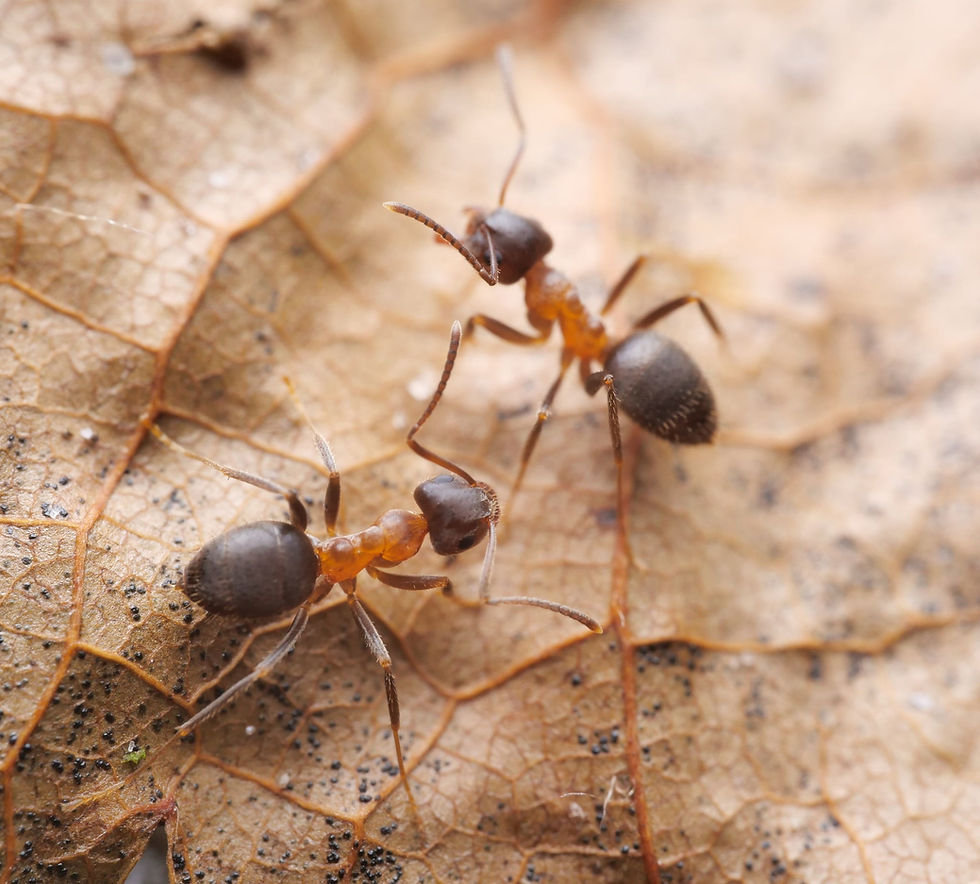
Caring for Pheidole noda colonies involves meeting their specific requirements:
-
Food: Offer a varied diet comprising sugars from fruit, sugar water, or ant jellies, supplemented with protein sources like fruit flies, mealworms, and crickets. Ensure any wild-caught insects are sterilized to prevent introducing mites to the colony.
-
Humidity: Maintain moderate humidity levels, providing partial nest hydration as needed. While they don't require high humidity, regular monitoring and adjustments are essential for colony health.
-
Temperature: Pheidole noda can benefit from higher temperatures, so provide a gradient within the nest to accommodate their preferences. However, avoid heating the water source to prevent ants from drowning in condensation.
-
Hibernation: Pheidole noda undergoes a diapause from November until March, during which colony activity slows down. Adjust care routines accordingly during this period.
-
Sting/Bite: While Pheidole noda ants cannot sting or bite, their aggressive behavior may require cautious handling. Protective measures are recommended to minimize the risk of injury during interactions.
Pheidole noda can be housed in various setups, but their small size makes them prone to escape. Opt for microspecies or acrylic nests for the best escape-proof setup, ensuring the safety and containment of your colony.
Explore the captivating world of Pheidole noda and embark on an enthralling journey into the realm of ant keeping. With proper care and attention, you'll witness the remarkable growth and behavior of these captivating ants.