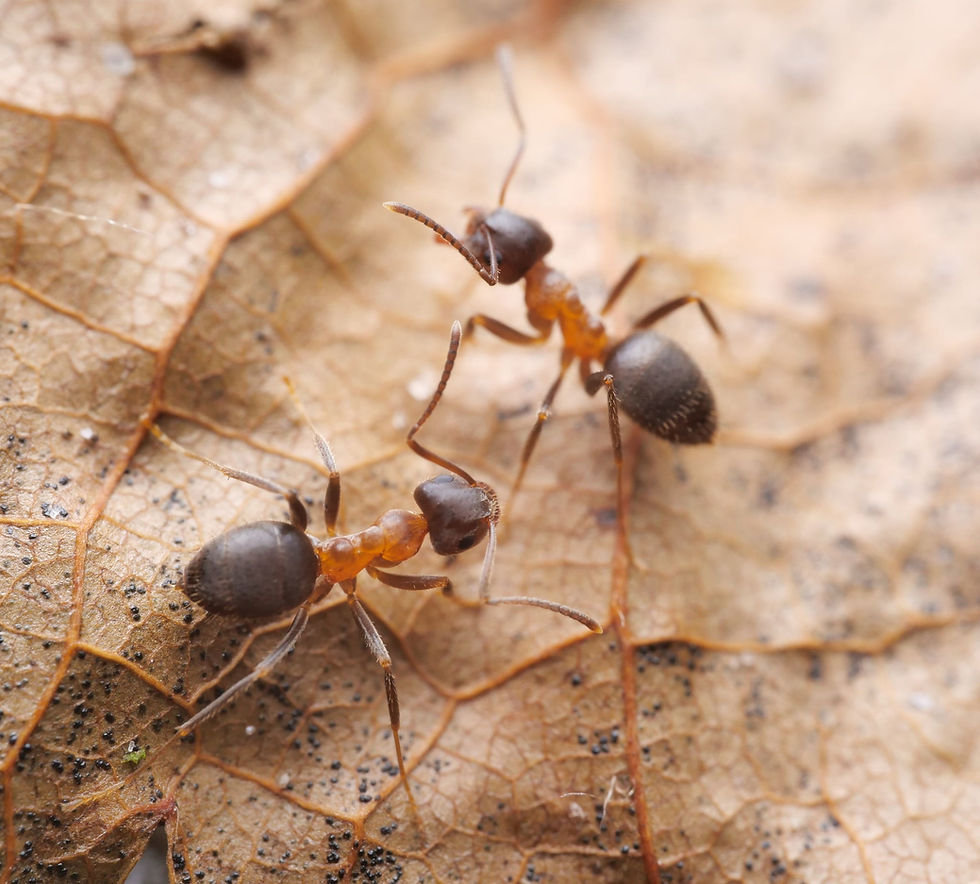
Cataglyphis velox, commonly known as the Desert Ant, is a fascinating species known for its rapid development and ability to thrive in extreme conditions. Native to Southern Europe and North Africa, these ants are adapted to sun-exposed sandy areas and deserts. Their striking red head and thorax, combined with a black gaster, make them easily identifiable and a unique addition to any ant keeper's collection.
Cataglyphis velox
Cataglyphis velox inhabits sun-exposed sandy areas and deserts, where they build their nests in the soil. These ants are polygyne, meaning they have multiple queens, with colonies ranging from 200 to 2,000 individuals. The queens measure 15-18 mm, and workers range from 5-10 mm. The ants are known for their exceptional visual orientation, allowing them to navigate effectively even under extreme conditions. They can withstand ground temperatures up to 50°C, thanks to their long legs and rapid movements, which help them cope with the intense heat.
When purchasing a Cataglyphis velox colony, ensure you have the appropriate setup to accommodate their rapid growth and environmental needs. These ants can be housed in various setups such as farms, farm basins, frame basins, islands, or Ytong/plaster nests. The formicarium should be medium to large to provide sufficient space for the growing colony. Use substrates like sand-loam and include decorations such as branches, roots, and stones to create a natural habitat that mimics their natural environment.
Food: Cataglyphis velox ants have a diet primarily consisting of insects such as mealworms, flies, mosquitoes, and crickets. They also consume honeywater for quick energy and may occasionally eat fruits. Ensure a steady supply of these food items to support their nutritional needs.
Humidity: Maintain relative humidity levels of 30-50% in the arena and 50-60% in the nest. Proper hydration of the nest is crucial to mimic their natural environment.
Temperature: These ants thrive in temperatures between 21-30°C in the arena and 21-24°C in the nest. Providing a gradient of temperatures within this range will help them flourish.
Hibernation: Cataglyphis velox undergoes a hibernation period for 1 to 2 months at temperatures between 15-18°C. Prepare for this period by gradually reducing the temperature to simulate their natural hibernation cycle.
Nesting and Housing: These ants build their nests in soil and can be housed in various setups, including farms, farm basins, Ytong/plaster nests, and Digfix setups. The nest should be designed to accommodate their rapid development and colony size. Use sand-loam as the substrate and include xerophytic plants and grasses for a more natural environment.
Development and Life Cycle: Cataglyphis velox has a fast development cycle, necessitating frequent space enlargement in the formicarium. Queens found their colonies claustrally, meaning they do not require feeding during the founding stage. The colonies can grow to several hundred workers initially but may eventually reach up to 2,000 workers.
Behavior and Characteristics: These ants are known for their aggressive behavior and fast movements. They have excellent visual orientation, which helps them navigate and forage effectively. Their ability to withstand extreme temperatures and their distinctive red and black coloration make them fascinating to observe.
Colony Management: Regularly monitor the colony's space and food requirements. As they grow rapidly, ensure their environment is expanded to prevent overcrowding. Provide a variety of food sources to meet their nutritional needs and maintain the appropriate temperature and humidity levels.
By following these guidelines, you can successfully keep and enjoy the dynamic and intriguing colony of Cataglyphis velox ants.