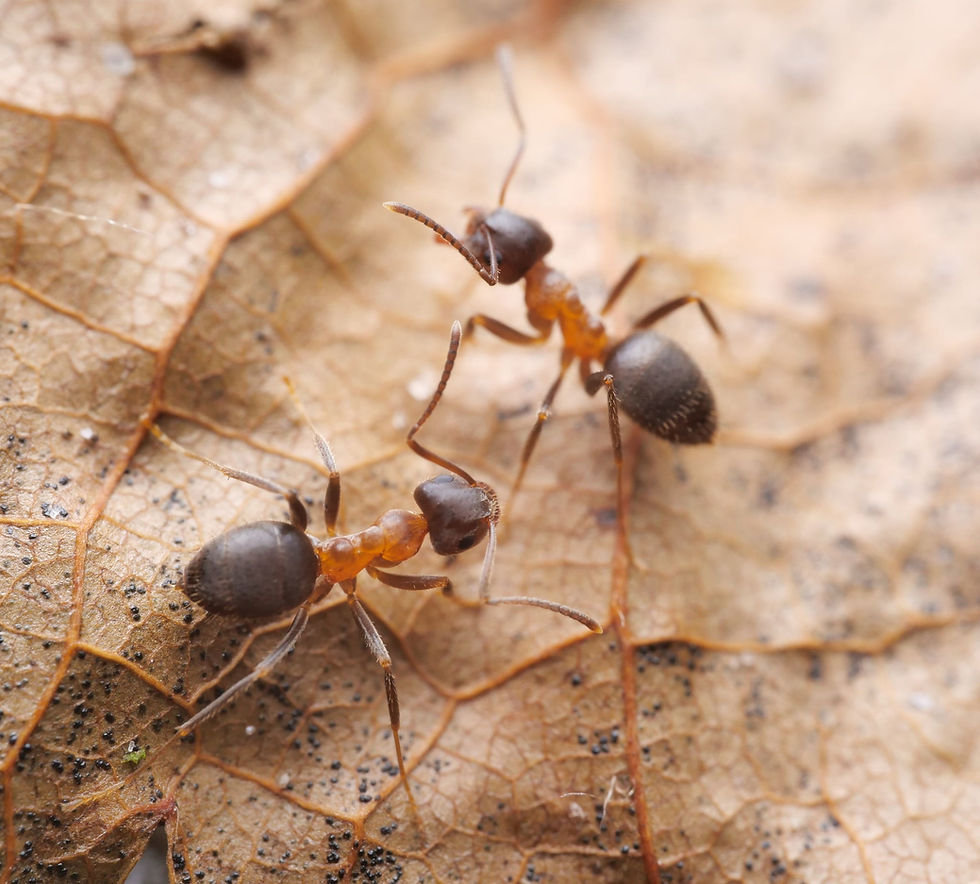
Aphaenogaster striativentris is a monogynous (single-queen) ant species known for its active foraging and adaptability. Native to warm Mediterranean regions (such as southern Spain), this species thrives in sunny, dry habitats. Queens of A. striativentris are medium-sized (around 10–12 mm in length) with slender brown bodies, and workers measure about 5–7 mm. Colonies are moderate in size, typically growing to a few hundred workers (sometimes around a thousand in mature colonies). With their lively behavior and interesting nesting habits, A. striativentris makes an intriguing species for ant hobbyists, including beginners looking to learn about Mediterranean ant care.
Aphaenogaster striativentris
In the wild, A. striativentris lives in warm, dry environments like open woodlands, scrublands, and grassy areas of the Mediterranean. They usually build their nests in soil, often under flat stones or in shallow underground chambers among leaf litter and roots. These ants are not deep excavators; instead, they take advantage of natural cover – a sun-warmed stone or a decaying log provides shelter and a stable microclimate for the colony. Foraging is typically done by individual workers roaming the ground and low vegetation in search of food. They are mostly diurnal (day-active), busily scavenging during the cooler parts of the day and seeking shade when midday temperatures soar. Fast and agile, A. striativentris workers will quickly carry prey or seeds back to the nest, and if a food item is too large, a few workers may cooperatively recruit others to help. In their ecosystem, they act as omnivorous scavengers – hunting small insects and other invertebrates, sipping on nectar or honeydew, and even collecting seeds, which helps in seed dispersal. This combination of solitary foraging and occasional teamwork, along with their adaptable nesting style, illustrates how A. striativentris survives and contributes to its natural habitat.
When buying a Aphaenogaster striativentris colony, it’s important to source from reputable ant suppliers or experienced breeders, as this species is less common in the pet trade. Ensure that the sale is legal in your area (since they are native to certain regions, there may be restrictions on transport). Typically, you will acquire a young colony with a fertilized queen and a small team of workers, or a single queen right after her nuptial flight. Because A. striativentris queens found new colonies independently (fully claustral founding), a lone queen contains all the nutrients she needs to raise her first brood without feeding. If you start with just a queen, house her in a clean test tube setup (water reservoir and cotton) and keep it in a dark, undisturbed place until the first workers emerge. For an established small colony, prepare a formicarium that isn’t too large – a small starter nest or test-tube connected to a foraging arena works well to begin with. Always check that the colony appears healthy (the queen should be active with a distended abdomen, and workers should be alert). Setting up their new home in advance will reduce stress: include a humid nesting area and a secure outworld for foraging. Buying or adopting a colony of A. striativentris can be a rewarding experience, giving you a window into the lives of these energetic ants – just be prepared to meet their needs for warmth, food, and space as they grow.
-
Habitat & Nesting: Mimic their natural habitat by providing a nest that allows for slightly moist soil or sand. Aphaenogaster striativentris love to nest under cover, so consider placing a flat stone or a piece of ceramic over part of the nesting area to simulate the flat rocks they often hide under. They aren’t huge diggers, so a pre-formed nest chamber (such as a small plaster, Ytong, or acrylic formicarium with added sand/soil) works well. Keep the nest moderately humid – damp to the touch but not water-logged – to help their brood develop, while keeping the foraging area (outworld) drier and well-ventilated. Always include a fresh water source in the outworld (a test-tube water feeder or cotton ball) so the ants can drink as needed.
-
Diet: Provide a varied omnivorous diet to keep your A. striativentris colony healthy. In captivity they readily accept protein foods like small insects (fruit flies, mealworms, crickets, etc., either live or pre-killed) which they will hunt or scavenge. They also enjoy sugars – offer sugar water or honey diluted in water as an energy-rich treat. You can also try bits of soft fruit (like apple or grape) and even seeds or nuts (sunflower seeds, crushed walnuts) since in the wild they may collect seeds and other plant matter. Remove any leftover food after a day to prevent mold or mites. This species is known to carry food items in creative ways; for example, they might drop sand grains or small pieces of debris into liquid food (syrup or honey) and then carry those soaked bits back to the nest. Don’t be alarmed – this is normal behavior for Aphaenogaster and ensures the colony can safely transport sweet liquids without spilling!
-
Temperature & Humidity: Being from a warm climate, A. striativentris prefers warm temperatures. Keep their environment around 24–28 °C for optimal activity. They can tolerate cooler nights, but if temperatures drop below ~15 °C, the colony will become sluggish and the queen may pause egg-laying. In fact, unlike ants from colder regions, this species doesn’t require a long winter hibernation. However, giving them a mild winter rest can be beneficial: you might gradually lower the temperature to around 15–18 °C for 6–8 weeks during the winter months to mimic the cooler season (the ants will remain mostly inactive but healthy). After this period, warm them up again to stimulate springtime activity and breeding. Throughout the year, maintain good humidity in the nest (around 50–70% relative humidity in their chamber is ideal) but keep the outworld on the dry side. A humidity gradient is important: the ants will move their brood to the spot with the best moisture and temperature. Always avoid extreme conditions – no frost in winter and not above 30 °C for prolonged periods – to keep the colony thriving.
-
Behavior and Handling: Aphaenogaster striativentris are active and fast-moving ants, so take care when handling their setup. Use a secure outworld with tall sides or a tight-fitting lid, and consider applying a fluon or talc barrier at the top to prevent escapes – these slender workers can climb well and will exploit any gap if they venture out. Despite their speed, they are generally non-aggressive towards keepers; they do have stingers (as they are a myrmicine ant) but they rarely use them on humans and their bite is mild. When the nest is disturbed, the colony’s reaction is usually to grab the brood and retreat to safety rather than to swarm out in defense. It’s best to place their formicarium in a low-vibration, quiet spot to avoid startling them frequently. Observe with patience: you’ll be rewarded with fascinating sights like their efficient foraging runs and cooperative effort in tackling larger prey. Over time, you may notice their unique habits, such as group recruitment to a big food item or the way they use pebbles to collect liquids. By respecting their space and keeping their enclosure escape-proof and clean, you’ll find that A. striativentris is a relatively easy and enjoyable species to keep, offering a wonderful glimpse into the world of ants for any hobbyist.
-