


Myrmica rubra Care Guide: Keeping the European Fire Ant
Myrmica rubra, also called the European fire ant or common red ant, is a small reddish-brown ant you have probably met in your own garden. Colonies live with many queens together, so the nest is always full of brood and activity. Keep them cool and moist and they are easy to care for, which makes them a good species for beginners. Just keep one thing in mind: unlike most European ants, Myrmica rubra can sting.
At a glance
Origin: large parts of Europe
Difficulty: beginner
Colony structure: many queens together
Workers: small, reddish brown, all about the same size
Growth: medium
Colony size: large
Temperature: room temperature or slightly cooler, no heating
Humidity: high
Winter rest: required
Most important point: never let the nest dry out
Appearance
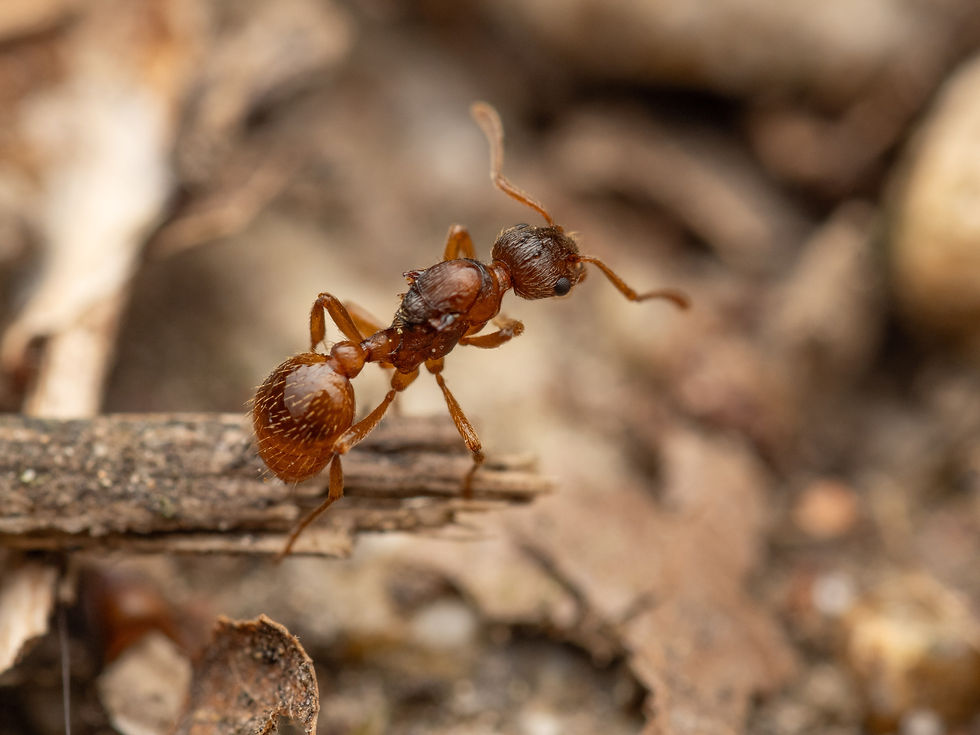
The workers are small, reddish brown and all about the same size. Look closely and you can see two small spines on the back and a sting at the tip of the gaster. The queens are a little larger and darker than the workers.
Where do they live?
Myrmica rubra lives across large parts of Europe in moist places, such as meadows, gardens, forest edges and the banks of ditches. They nest in damp soil, under stones and in rotting wood. The species has also spread to North America, where it is known as the European fire ant because of its sting. In some places there it forms huge networks of nests that push out other ants.
Many queens in one colony

Myrmica rubra is extremely polygynous: one colony can hold many queens. Not every queen lays eggs, though, and some queens in a colony do not reproduce at all. Young queens are often taken back into an existing nest after mating, and a big colony can split into smaller colonies that each take several queens with them. Our colonies come from larger multi-queen colonies that are split into the number of queens you order, from one to five queens.
A fun fact: Myrmica rubra is the main host of the dusky large blue, a rare butterfly. Its caterpillar tricks the workers into carrying it into the nest, where it lives among the ant brood until it turns into a butterfly.
Moisture: the most important point
This is where most problems start. Myrmica rubra needs a lot of moisture, and if the nest gets too dry the colony dries out. Hydrate the nest regularly, keep most of it moist but not soaking wet, and always provide a water source. Check the nest more often in warm weather, when it dries out faster.
Temperature
Myrmica rubra does well at room temperature or slightly cooler. They do not like heat, so heating is not needed and not recommended. Keep the setup out of direct sunlight and away from radiators.
Winter rest
A winter rest is required. Give the colony a cool rest period every year from late autumn to early spring, for example in an unheated room, a garage or a wine fridge. Keep the nest moist during the winter rest too, and always keep water available.
Feeding
Insects: they need a lot of protein. Feed plenty of insects such as fruit flies, crickets, mealworms or cockroaches. Freeze wild-caught insects first. Read more in what do ants eat.
Sugar: they drink a lot of sugar water or honey water, so keep it available.
Portions: feed regularly and remove leftovers before they mould in the moist setup.
Water: always provide clean water.
Feeding time is one of the best parts of keeping this species. The workers are active and eager, and they quickly swarm over every insect you offer.
Housing
Small colony: a moist test tube setup connected to a Mini Outworld works well.
Larger colony: a nest that holds moisture well, such as the Small Ytong Nest - Type A. Make sure the nest never dries out.
Terrarium: Myrmica rubra is one of the best species for a naturalistic terrarium. Read why in Myrmica rubra: the ideal ant for a naturalistic terrarium.
Escape prevention: small workers fit through small gaps, so check that everything closes well. Use an anti-escape barrier on the outworld, see our anti-escape guide.
Handle with care
Workers can sting, and they will when the nest is disturbed. For most people the sting is not dangerous, but it can be painful, a bit like a nettle. Work calmly when you open the setup or move the nest, and do not let the ants walk over your hands. If you know you react badly to insect stings, be extra careful.
Is Myrmica rubra right for you?
If you want a busy colony with lots of brood and activity, and you do not mind a species that can sting, Myrmica rubra is a great choice. Keep the nest moist, keep it cool and give them a proper winter rest, and they will reward you with a growing colony full of queens. Have a look at our Myrmica rubra colonies.
Sources
AntWiki. Myrmica rubra.

Comments