


Myrmica rubra: The Ideal Ant for a Naturalistic Terrarium
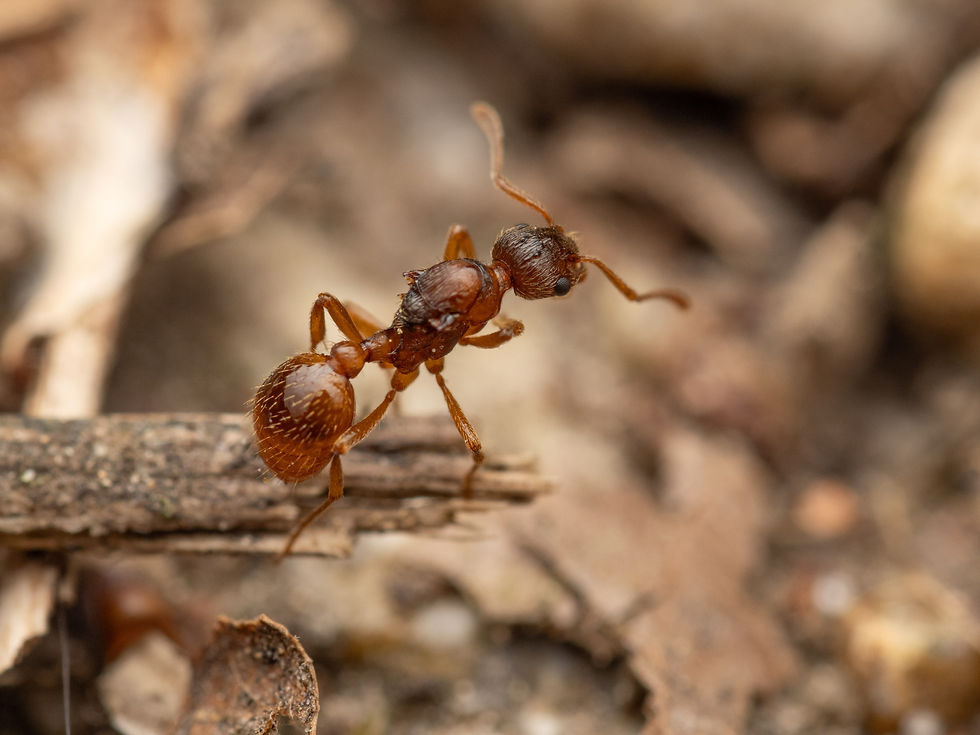
Myrmica rubra is a native European ant that most people have encountered without realizing it. Commonly known as the European fire ant or common red ant, it is widespread across the Netherlands and much of temperate Europe, typically nesting in garden soil, under bark, and in the root layers of grassland. In captivity, it is one of the most rewarding species you can keep in a naturalistic setup.

Why Myrmica rubra Thrives in a Terrarium
In the wild, Myrmica rubra colonies live in exactly the kind of environment a planted terrarium recreates. Layered soil with embedded organic matter, moss cover, root structures to tunnel through, and moderate humidity. A well-built terrarium closely mirrors this, and the colony will settle in quickly and behave naturally from day one. If you are new to terrarium setups, our terrarium setup guide covers the basics of building one.
Colony Size and Growth
Myrmica rubra colonies can reach 1,000 to 3,000 workers at maturity in the wild. Captive colonies typically stay somewhat smaller but can still grow to impressive sizes over a few seasons. This species can be polygyne — colonies may have multiple queens — which means growth can be faster than with monogyne species. Give the colony room in your terrarium from the start rather than planning to upgrade later.
Temperature, Humidity, and Diapause
This species tolerates a wide temperature range, which makes it forgiving for beginners. Room temperature between 18 and 24 degrees Celsius suits them well during the active season. Myrmica rubra benefits from a winter diapause period of 2 to 3 months at cooler temperatures, around 5 to 12 degrees Celsius. This mimics their natural cycle and improves long-term colony health and queen longevity. Humidity should be moderate to high, which a well-planted terrarium naturally maintains.
Feeding
Myrmica rubra is omnivorous and accepts a wide range of food. They take protein readily — small insects, fruit flies, and mealworm pieces all work — as well as sugar water and honey diluted with water. They are active, confident foragers and will cover the full surface of a terrarium when hunting, which makes feeding sessions genuinely interesting to watch.
Getting Started
Our Myrmica rubra is available as a founded colony ready to move into a prepared terrarium. For the best results, introduce springtails to the substrate a week or two before the colony arrives. They will establish themselves and start managing mold and organic debris before the ants move in, giving the setup a clean, stable start.


Comments