


How to Set Up an Ant Terrarium
A terrarium gives an ant colony a naturalistic environment that mirrors what they would experience in the wild. Instead of a bare outworld connected to a separate formicarium, everything exists within one space: soil, plants, leaf litter, and the colony living within it. For keepers who enjoy watching natural behavior rather than just managing a setup, it is one of the most rewarding formats in ant keeping.

What Makes a Terrarium Different
A standard ant setup separates the nest from the foraging area. A terrarium blends them together or keeps them closely integrated. The colony lives in or under the soil, uses plants and debris for structure, and forages through the same space. This creates a more dynamic setup to observe and, for the right species, reduces stress because the environment closely matches what they know.
Choosing the Right Container
A glass or acrylic enclosure with good ventilation works well. The size depends on the colony you plan to keep, but erring larger than you think you need is usually the better call. Terrariums are much harder to expand than modular setups, so planning for colony growth from the start saves a lot of trouble later. A lid with a mesh panel ensures adequate airflow without letting humidity drop too fast.
Substrate and Structure
The substrate is the foundation of the setup. A mix of topsoil, sand, and coconut fiber gives most species what they need: structure for tunneling, some drainage to avoid waterlogging, and enough moisture retention to keep the environment stable. Build depth. Most ant species want to dig, and a substrate layer of at least 10 to 15 cm gives them room to create a proper nest. Cork bark, flat stones, and leaf litter on the surface add shelter and create natural features.
Plants
Live plants add humidity, oxygen exchange, and a more natural feel. Choose species that tolerate the moisture levels your ants need. Mosses, small ferns, and low ground covers work well for temperate species. Avoid anything with toxic sap or strong essential oils. Plant roots also help bind the substrate, which reduces tunnel collapse over time.
The Cleanup Crew
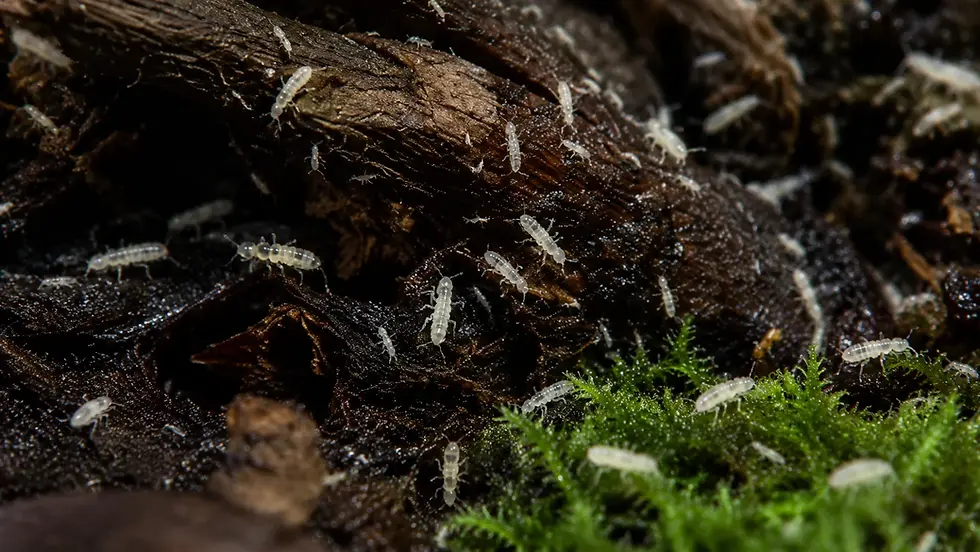
Keeping a terrarium clean is where most keepers run into problems. Uneaten food, dead ants, and organic debris accumulate quickly in a naturalistic setup and create mold and bacteria issues. This is where springtails come in. Our Springtails are small arthropods that feed on mold, fungal growth, and decaying organic matter. They act as a natural cleaning crew that runs continuously in the background without any effort from you. A healthy springtail population is one of the most practical investments in a terrarium setup.
Which Species Work Best
Not every ant species is suited to terrarium life. The best candidates naturally nest in soil or under bark in woodland or garden environments. Small to medium-sized temperate species tend to settle in fastest, behave naturally in a layered substrate, and are forgiving of the humidity variation that comes with a living setup. We cover one of the best options for this format in a dedicated post.

Comments