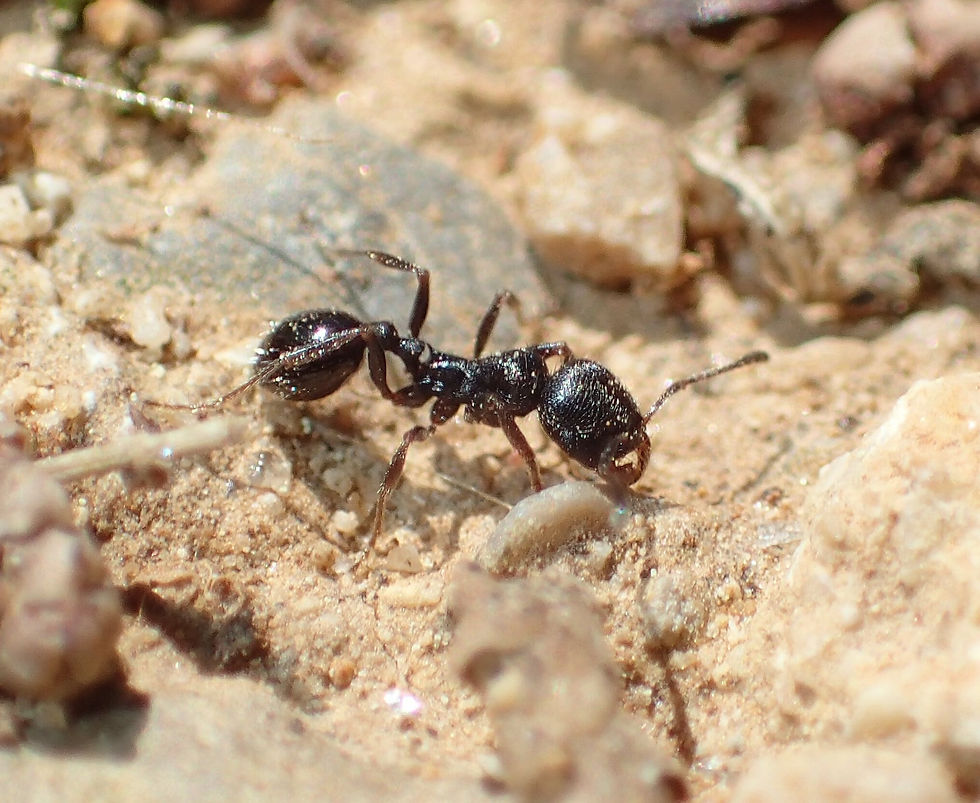
Crematogaster scutellaris, commonly known as the Acrobat Ant, is a fast-growing and aggressive species that originates from the Mediterranean region, where they typically live in trees. These ants are known for their distinctive appearance, with red heads and black bodies, and for their highly protective nature over their nests. Their colonies can grow rapidly and reach sizes of 10,000 to 20,000 workers once fully mature, making them a lively and fun species for ant keepers.
Crematogaster scutellaris
Habitat & Distribution
Crematogaster scutellaris can be found in various Mediterranean regions, including parts of Southern Europe and North Africa. They primarily inhabit trees, where they build their nests. In the wild, their aggressive behavior helps protect their colonies from intruders, and their fast growth rate allows them to thrive in their natural habitat.Behavior & Ecology
These ants are known for being highly territorial and aggressive, which makes them efficient at defending their nests. The workers will readily attack invaders, and they are known for their escape artist tendencies in captivity, requiring multiple forms of escape prevention. In addition to their combative behavior, they are adept at building nests in dry environments, making them adaptable to various ant-keeping setups.Colony Structure & Reproduction
Crematogaster scutellaris colonies can grow quite large, with mature colonies boasting between 10,000 and 20,000 workers. The queens range between 8-10 mm, while the workers are 3-5.5 mm in size. These ants have a relatively fast growth rate, meaning colonies can expand rapidly, providing an engaging experience for ant keepers. Queens are capable of laying eggs at a fast pace, supporting the colony's growth and development.Appearance
One of the most striking features of Crematogaster scutellaris is their red head and black body, which makes them easy to identify. These ants are visually appealing and active, making them a popular choice for ant keepers who enjoy observing their colonies.Buying a Crematogaster scutellaris Colony
For ant enthusiasts, Crematogaster scutellaris is a species that offers excitement and rapid colony development. While their aggressive nature may pose challenges, they are a rewarding species to keep. Be aware that these ants are skilled at escaping enclosures, so having reliable escape prevention measures in place is critical.
For ant enthusiasts, Crematogaster scutellaris is a species that offers excitement and rapid colony development. While their aggressive nature may pose challenges, they are a rewarding species to keep. Be aware that these ants are skilled at escaping enclosures, so having reliable escape prevention measures in place is critical.
Environmental Conditions
Crematogaster scutellaris thrives in warm temperatures, ideally between 26-30°C. Unlike some other species, they do not require constant hydration in their nests once the colony has grown to over 50 workers. However, providing a water source in the outworld, such as a test tube with water, is essential.These ants prefer dry conditions, so ensure the nest is well-ventilated and that there is not excessive moisture. Humidity requirements are minimal, and once the colony is established, the ants can be housed in nests with little hydration as long as a water source is available in the outworld.
Hibernation (Diapause)
Crematogaster scutellaris requires a short diapause period, typically from early December to early February, during which temperatures should be reduced to around 15-18°C. Colonies originating from Northern Africa or Southern Europe can tolerate shorter hibernation periods. Hibernation is important for their reproductive cycle and overall health, so it's crucial to provide this seasonal rest period.Formicarium Setup
Young colonies of Crematogaster scutellaris can be housed in test tube setups with cork inserts, which offer the ants a dry and secure environment. As the colony grows, transitioning them to larger setups like wooden nests is recommended. Ensure that a water test tube is always present in the outworld to provide hydration, as the ants prefer drier nesting conditions.Because these ants are escape artists, using multiple escape prevention methods is advised, such as oil or PTFE barriers, to prevent them from escaping their enclosures.
Feeding & Care
Crematogaster scutellaris are opportunistic feeders and will accept a variety of foods, including crickets, mealworms, sugar water, honey, and more. When feeding insects caught in the wild, make sure to freeze or boil them first to sterilize them, as this will prevent the introduction of mites or other pests into your colony.These ants have a healthy appetite for proteins and sugars, so providing a varied diet will help the colony grow and thrive.
Handling & Safety
While Crematogaster scutellaris has a specialized stinger that can spray formic acid, it is not harmful to humans. When agitated, workers may bite, and their bites can be painful, though not dangerous. Ant keepers should exercise caution when handling or disturbing the colony to avoid provoking an aggressive response.Summary
Crematogaster scutellaris is a highly active and rewarding species for ant keepers. Their rapid growth, distinctive appearance, and aggressive yet fascinating behavior make them an exciting species to observe. With proper care and the right setup, including warm temperatures, dry nests, and regular feeding, they will flourish in captivity.
This species is well-suited to experienced ant keepers who enjoy a challenge, as managing their escape tendencies and ensuring proper conditions can be demanding but ultimately very rewarding.