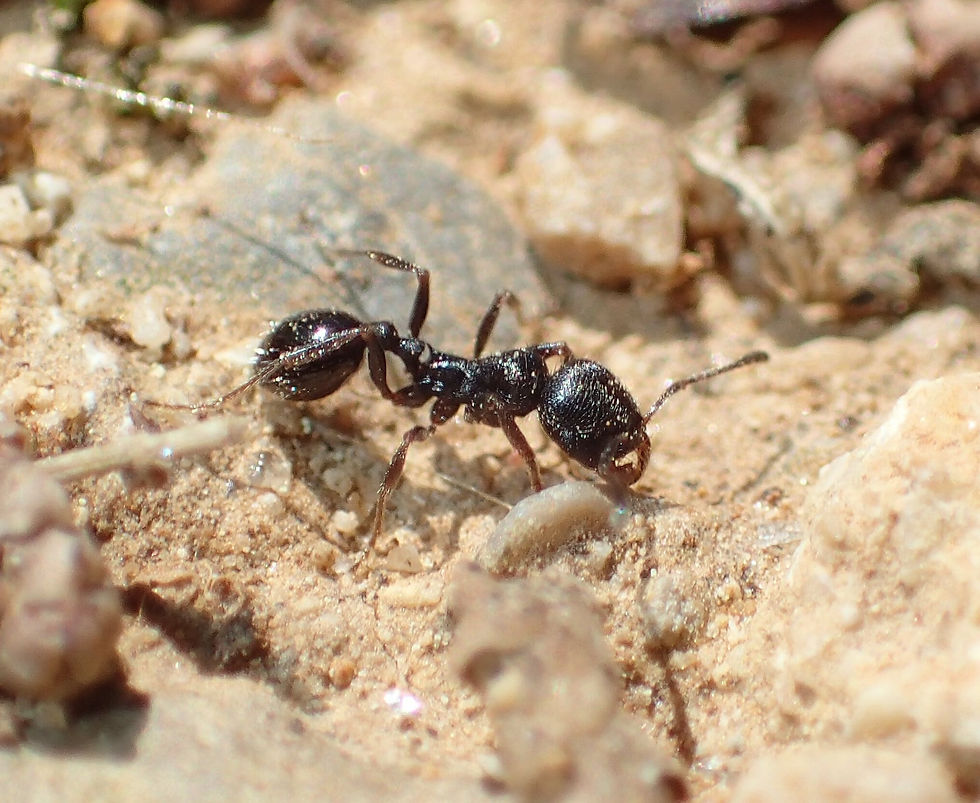
Very rare ant species, so rare no good photo's excist!
Oxyopomyrmex saulcyi
Oxyopomyrmex saulcyi inhabits dry, arid habitats. Nests are usually located in sandy soil . Forel (1904) published a very detailed description of O. saulcyi nests found in Tunisia. Nest entrances were single, narrow and surrounded by a crater (2-3 cm diameter, 2-3 cm height). From the entrance hole a long, vertical corridor leads to the first chamber (occupied by gyne and larvae). From the first chamber, a second vertical corridor (15-20 cm length) leads to 2-3 chambers filled by seeds and workers.
General
Not much is known about this species so take this careguide with a grain of salt.Food
Oxyopomyrmex saulcyi eats seeds, small insects and sugars.If you feed insects from the wild freeze or boil these insects to sterilize them. Skipping this step can introduce mites to your colony.
Humidity
Oxyopomyrmex saulcyi does not need a damp nest. If you hydrate the nest regularly (once or twice a week) you should have no problem in keeping the humidity right for these ants. Always make sure the ants have an external watersource in the test tube when in a nest.Temperature
Oxyopomyrmex saulcyi does not need to be heated. Keeping them at room temperature is more then fine. Heating these ants will speed up the brood progress but is not needed.Hibernation
Oxyopomyrmex saulcyi does not hibernate but has a diapause. Keeping these ants around 10-15 degrees during November until March greatly befinits these ants and will stimulate brood production after hibernation.Sting/bite
These ants don't sting or bite. They are not agressive and will only become more active when disturbed.These ants are very small. Recommended is a test tube setup or Esthetic Ants acrylic nest.