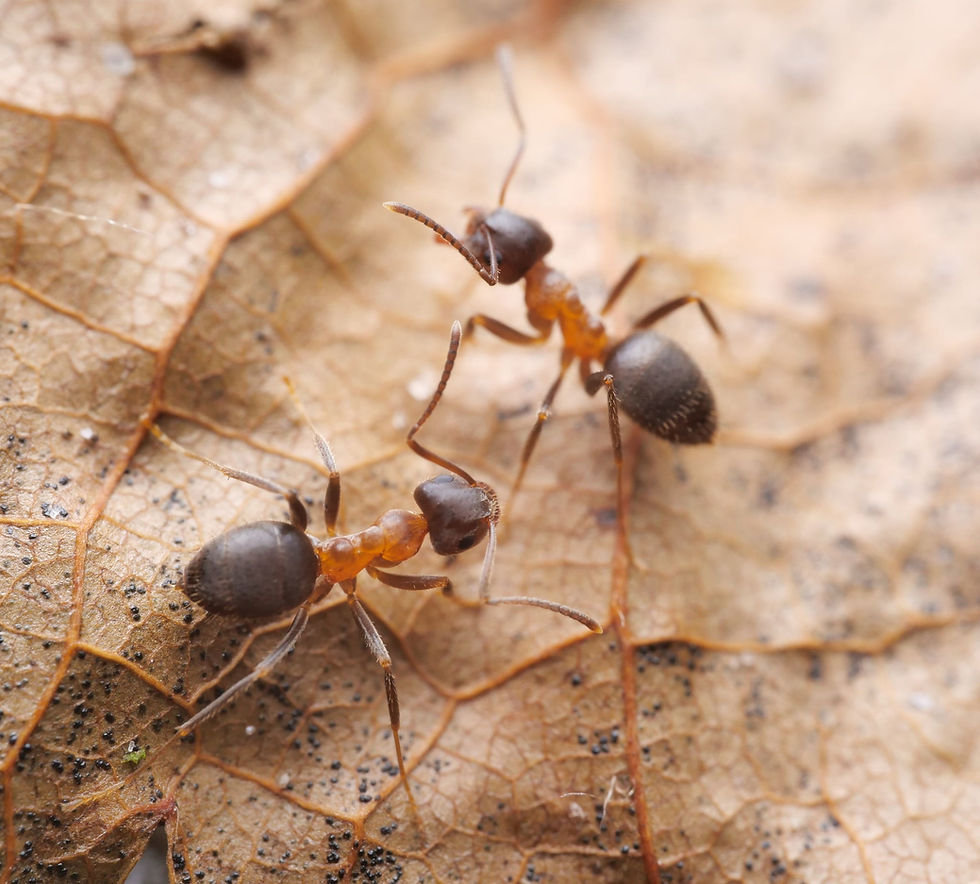
A rare Camponotus species from South-America.

Pictures: @_byadrian
Camponotus atriceps
Camponotus atriceps is a rare South-American Camponotus species. There is not much known about this species. They are sometimes found nesting in Cecropia pachystachya trees. This species is pretty large and they have a beautiful color.
Camponotus atriceps has various types of mayors and they comes in a variety of colours, they are generalists, which means they nest in both trees and soil, although they almost always prefer soil of medium to low humidity, they thrive in warm environments and prefer scavenging rather than hunting.
They are not polygynes, instead theyre pleogynes, which means they can collaborate as queens but when the colony begins, only one queen will survive.General
Caring for Camponotus atriceps is pretty easy. If this colony is left at piece you should have no problem in raising this colony.Food
Camponotus atriceps are not picky eaters. They love sugars that come from fruit, sugarwater or ant jellys. For protein the best food for them is fruitflies, mealworms, crickets and other smaller insects.If you feed insects from the wild freeze or boil these insects to sterilize them. Skipping this step can introduce mites to your colony.
Humidity
Camponotus atriceps does not need a damp nest. If you hydrate the nest regularly (once or twice a week) you should have no problem in keeping the humidity right for these ants. Always make sure the ants have an external watersource.Temperature
Since Camponotus atriceps is a tropical species they thrive under a heated setup. Heat part of the setup to provide the ants with a nice gradient.Hibernation
Camponotus atriceps does not hibernate.
Sting/bite
The majors of Camponotus atriceps can bite but this is not painfull.You can house these ants in almost any setup or nest. The Esthetic Ants mesh nests are perfect for these ants.
Very easy, can be kept by beginners.