


Do Ants Bite or Sting?
Updated: 1 day ago
Got a little nip from an ant in the garden? Then you might wonder: did it bite or did it sting? Both are possible. All ants have jaws, but only some have a working sting. Others spray acid instead.

Ants that bite (and spray)
Ants of the subfamily Formicinae have no working sting. They bite with their jaws and often spray formic acid into the bite, which makes it burn a little. In Europe you know them well:
Lasius niger, the black garden ant, gives a tiny bite you barely feel. It is also a great first species to keep, see our Lasius niger colonies.
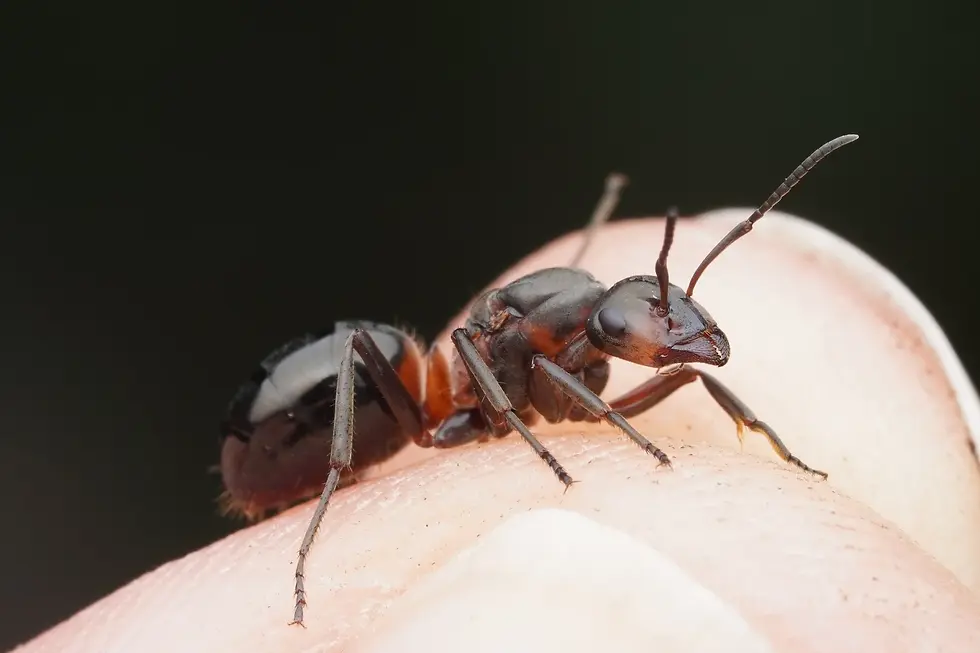
Red wood ants (Formica rufa group) bite harder and spray formic acid. Read more about their formic acid.
Big carpenter ants like Camponotus can give a firm bite with their strong jaws.
Ants that sting
Many other ants have a sting at the end of their gaster, just like bees and wasps. Unlike a bee, an ant can usually sting more than once.
Myrmica rubra, the European fire ant, is the best-known stinging ant in Europe. Its sting burns for a while, like a nettle.
Fire ants (Solenopsis) bite to hold on and then sting several times. In regions where they live, they are the most common cause of painful stings. Living in the US? Read why we do not recommend keeping fire ants.
Bull ants, jack jumpers and the bullet ant have strong stings and are among the most painful ants in the world.
What does it feel like?
A bite usually feels like a small pinch, sometimes with a burning feeling from the acid. A sting feels more like a nettle or a tiny wasp sting: a burning pain that fades after some minutes to hours, sometimes with a red bump.
What should you do after a bite or sting?
Wash the spot with water and soap.
Cool it with something cold to reduce pain and swelling.
Do not scratch, especially with fire ant stings.
Get help right away with breathing problems or swelling of the face or throat. Read more in can an ant sting kill you?.
Photo: © Benjamin Burgunder


Comments