


Formic Acid: How Red Wood Ants Spray and Why
Updated: 1 day ago
Hold your hand above a busy red wood ant mound and you will soon smell something sharp and sour. That is formic acid, the main weapon of red wood ants. Here is how they use it, where the name comes from, and what it has to do with medicine and birds.
How red wood ants spray
Red wood ants have no sting. Instead, they produce formic acid in a gland in their gaster. When a worker feels threatened, it bends its gaster forward between its legs and sprays the acid at the attacker. Often it bites first and then sprays the acid into the wound. When a nest is disturbed, hundreds of workers spray at the same time, creating a cloud of acid you can smell from above the mound.
Named after ants
Formic acid owes its name to ants. In 1671, the English naturalist John Ray distilled large numbers of red wood ants and collected the acid that came out. It was named after formica, the Latin word for ant. Today, formic acid is made in factories and used in many products, but the name still points back to the red wood ant.
A weapon against enemies
Formic acid is very effective against other insects. Prey such as caterpillars and beetles are quickly overpowered, and enemies such as other ants are driven away. For larger animals, the combination of a bite and a squirt of acid is unpleasant enough to keep them at a distance.
A medicine for the nest
Red wood ants also use formic acid as medicine. They collect pieces of conifer resin and bring them into their nest, up to 20 kg in a large mound. Resin alone already protects the colony against bacteria and fungi. In 2017, researchers discovered that the ants spray formic acid onto the resin, which makes it much stronger against harmful fungi. The two together work better than the sum of their parts.
Birds that use ants
Some birds, such as jays, have a strange habit called anting. They sit on an ant nest and let the ants crawl into their feathers, or pick up ants and rub them over their feathers. Formic acid may help them get rid of parasites or care for their feathers, but scientists are still not sure why birds do it.
Is it dangerous for you?
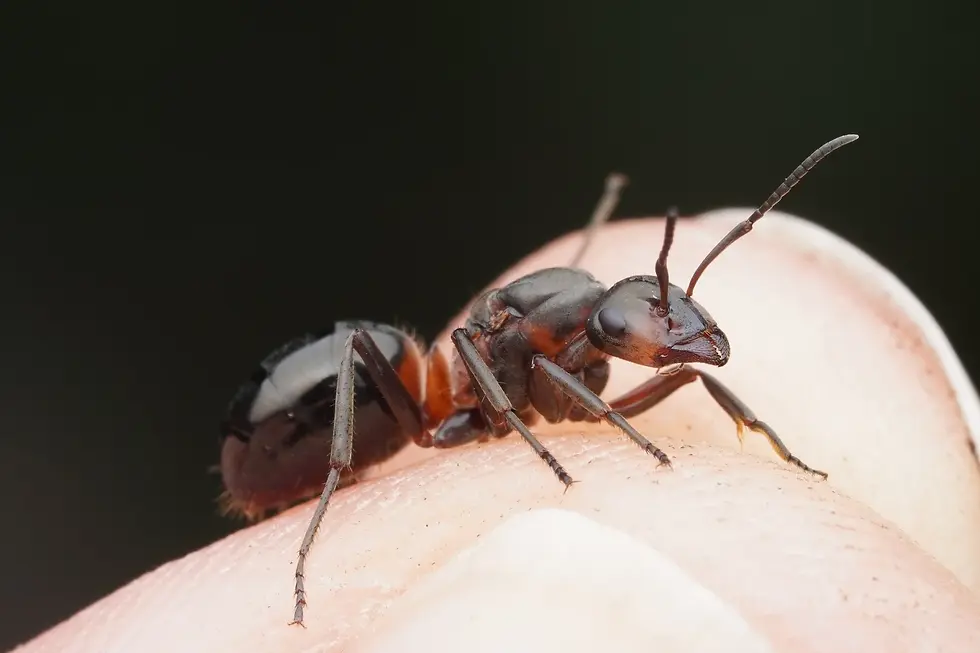
For people, a bite from a red wood ant with a squirt of formic acid stings a little and smells sharp, but it is harmless for most people. Keep the acid away from your eyes and wash your hands afterwards. Ant keepers who keep Formica species notice the smell as soon as they open the setup. Read more in our Formica rufa care guide.
More about red wood ants
Want to know more? Read our red wood ant facts or find out how a red wood ant mound works. Thinking of keeping them? Have a look at our Formica rufa colonies.
Sources
Wikipedia. Formica rufa.
Brütsch, T. et al., 2017. Wood ants produce a potent antimicrobial agent by applying formic acid on tree-collected resin. Ecology and Evolution.
Chapuisat, M. et al., 2007. Wood ants use resin to protect themselves against pathogens. Proceedings of the Royal Society B.
BirdWatching. Anting is widespread and fascinating, but its purpose is uncertain.
Photos: © Jonghyun Park (CC BY 4.0), via iNaturalist.


Comments