


Can an Ant Sting Kill You?
Updated: 1 day ago
An ant sting can hurt a lot, but can it actually kill you? For almost everyone the answer is no. A normal sting causes pain, redness and some swelling, and that is it. Ant stings only become dangerous in two situations: when someone is allergic to the venom, or when a person or animal gets stung very many times at once. Want to know which ants use venom in the first place? Read are ants poisonous?.
This post is general information, not medical advice. In an emergency, always call your local emergency number (112 in Europe).

Allergy: the real danger
Just like with bee and wasp stings, some people develop an allergy to ant venom. Their immune system overreacts, which can lead to anaphylaxis: a severe reaction that affects the whole body. Signs include swelling of the face or throat, hives all over the body, difficulty breathing, dizziness and fainting. This needs immediate medical help.
Which ants cause the most problems?
Jack jumper ants (Myrmecia pilosula) in Australia: up to about 3 percent of people in areas where they live are allergic. In Tasmania, four deaths from anaphylaxis were recorded between 1980 and 2000.
Red imported fire ants (Solenopsis invicta) in the United States: depending on the study, between 0.6 and 6 percent of people who are stung develop anaphylaxis, and more than 80 deaths have been reported over the years. Read why fire ants are not a good idea to keep, or see our US guide to invasive ant species in the United States.
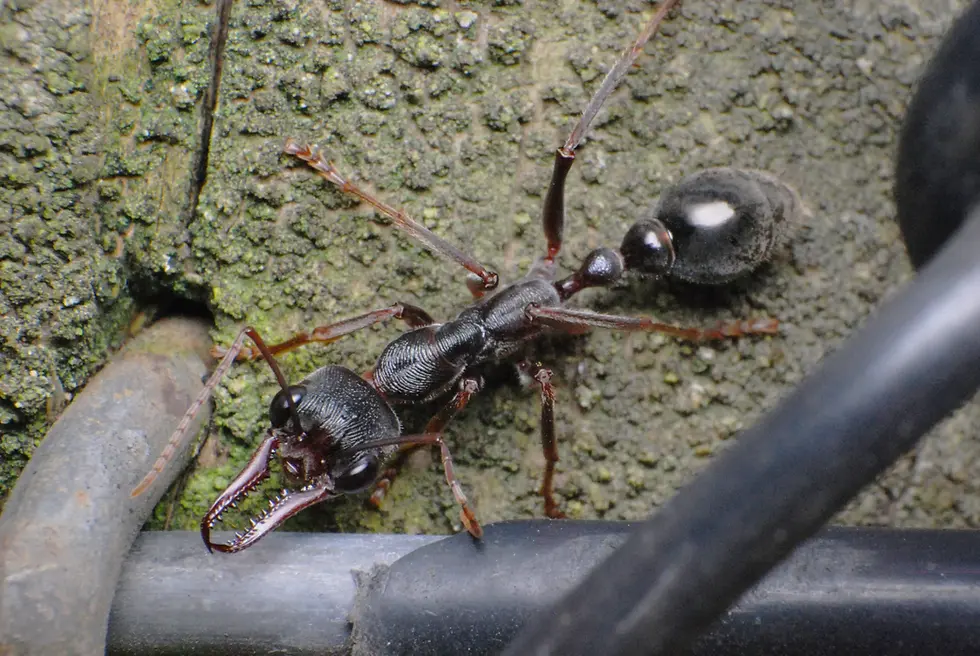
Bull ants (Myrmecia) can also cause serious allergic reactions.
What about the most painful stings?
Pain and danger are not the same. The bullet ant has one of the most painful stings in the world, but for people without an allergy it is not deadly. The pain fades after many hours.
Many stings at once
Fire ants attack in large numbers. People and animals that cannot get away, such as very young children, elderly people or tied up animals, can receive hundreds of stings, and that can be dangerous even without an allergy.
And in Europe?
In Europe and the Netherlands ants are not a real danger. Our garden ants mostly bite, and stinging species such as Myrmica rubra give a short, burning sting. Serious allergic reactions to these ants are very rare.
When should you get help?
Call emergency services right away with breathing problems, swelling of the face or throat, dizziness or fainting.
See a doctor if the swelling keeps growing, the spot gets infected or you were stung many times.
If you have had a strong reaction before, ask your doctor about an emergency adrenaline injector and allergy treatment.
Sources
Wikipedia. Jack jumper ant.
Wikipedia. Toxicology of red imported fire ant venom.
Photo: © Andrew Allen


Comments