


Bull Ant Facts: 15 Things About Australia's Myrmecia
Updated: 1 day ago
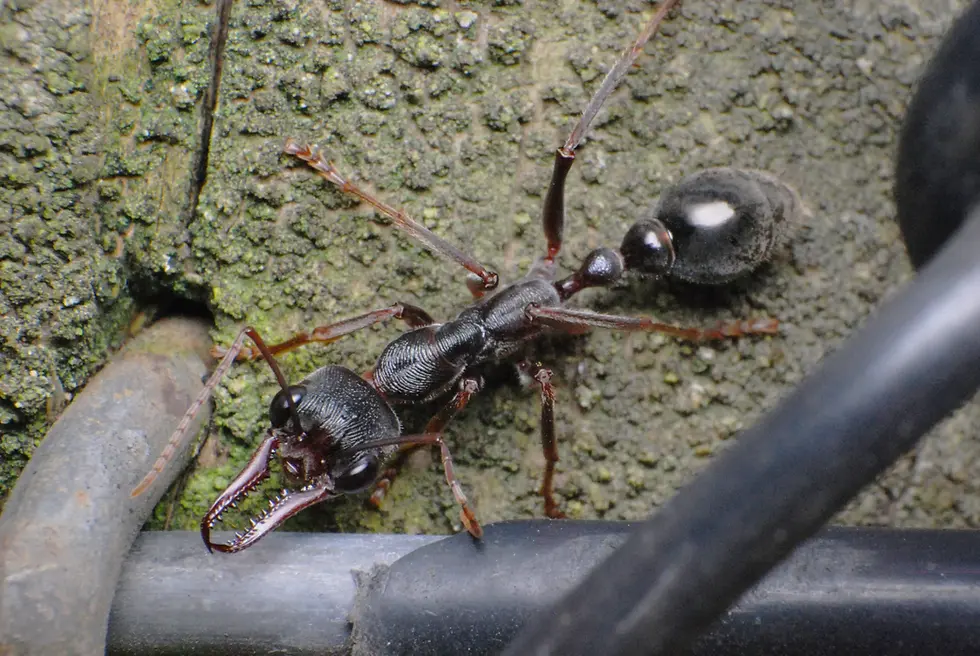
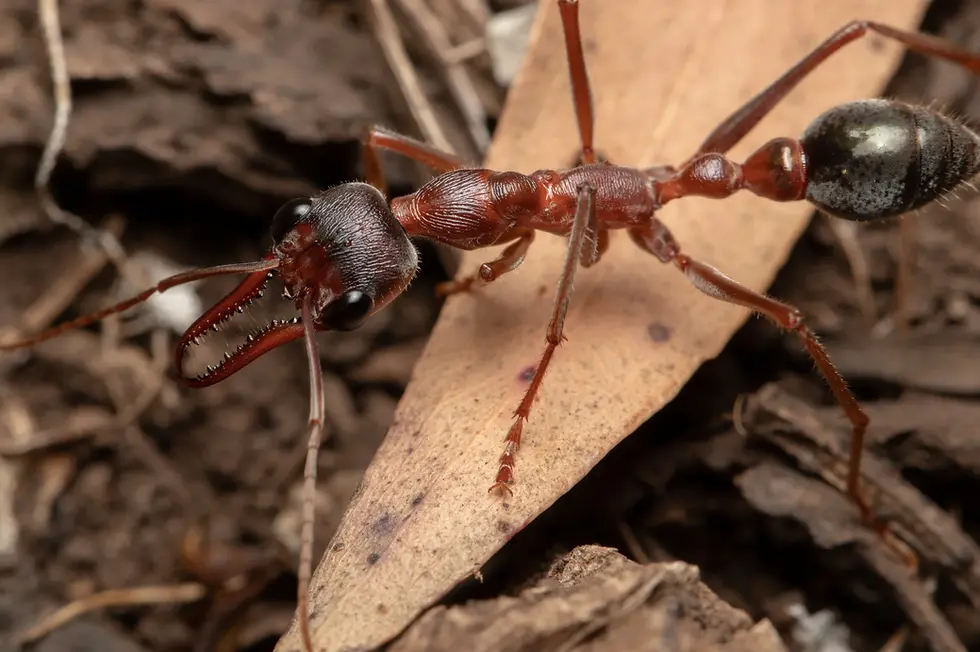
Bull ants are among the most famous ants in the world. These large Australian ants of the genus Myrmecia have huge eyes, long jaws and a powerful sting, and they have been around in one form or another for a very long time. Here are 15 facts about bull ants.

1. There are around 90 species
The genus Myrmecia contains around 90 described species, and researchers think there may be more still waiting to be named. See the most popular ones in bull ant species: an overview.
2. Almost all of them live in Australia
Bull ants are found throughout Australia and its coastal islands. Only one species lives elsewhere: Myrmecia apicalis, which is found on the Isle of Pines in New Caledonia.

3. Some are among the largest ants on earth
Bull ants range from about 8 mm to around 4 cm. Workers of Myrmecia brevinoda can reach about 3.7 cm, and some queens are even larger. Read more in Myrmecia brevinoda.
4. They have excellent eyes
Bull ant eyes can contain around 3,000 facets, among the largest eyes in the ant world. They spot movement from a metre or more away and react to intruders before they even reach the nest. Read more in how bull ants see.
5. They hunt alone
Unlike many ants, bull ants do not lay scent trails or call nestmates to food. Each worker hunts on its own, using its eyes to find prey. Read more in how bull ants hunt.
6. Adults drink, larvae eat meat
Adult bull ants live mainly on sweet liquids such as nectar and honeydew. The prey they catch goes to the larvae, which are carnivores.
7. Their sting is not barbed
A bull ant can sting again and again, because its sting has no barbs. The venom is among the most potent in the insect world. Read more in the bull ant sting.
8. Some of them jump
Jack jumpers and jumper ants can leap several centimetres by suddenly extending their middle and hind legs. Read the difference in bull ant or jack jumper.
9. One species has the fewest chromosomes possible
Males of Myrmecia croslandi have just a single chromosome, and females have one pair. That is the lowest number possible for any animal. Read more in Myrmecia croslandi.
10. Workers can become mothers
In many bull ant species, workers can mate and lay fertilised eggs. Researchers kept a queenless colony of Myrmecia pyriformis that kept producing new workers for three years. Read more in bull ant colony life.
11. They decorate their nests
Many species build mounds and decorate them with pebbles, charcoal, leaves and twigs. These materials may help the nest warm up in the sun.
12. One species navigates by moonlight
The nocturnal Myrmecia midas finds its way home in the dark using the pattern of polarised moonlight. Read more in how bull ants find their way.
13. Their family is ancient
The subfamily of bull ants goes back a very long way, and its relatives were once found far outside Australia. Read more in bull ants: living fossils.
14. One species is in the Guinness World Records
Guinness World Records has listed Myrmecia pyriformis as the most dangerous ant in the world. Read more in Myrmecia pyriformis.
15. They are part of Australian culture
Bull ants have appeared on an Australian stamp and coin, and Myrmecia gulosa is the emblem of the Australian Entomological Society. The first specimen of that species was collected in 1770 by Joseph Banks.
Can You Keep Bull Ants?
Bull ants are impressive to watch, but they are not for beginners. Their sting is very painful and can cause swelling, and for people who are allergic to insect venom it can even be dangerous. Always work carefully, use tweezers instead of your hands and make sure your outworld is truly escape proof. Our tips on how to prevent your ants from escaping help with that.
Bull ants are large, so they need a nest with spacious chambers and wide tunnels. Our Type B Ytong nests, such as the Medium Ytong Nest Type B and the Large Ytong Nest Type B, work well for them. Ytong holds moisture well, the chambers are big enough and you can see your ants clearly.
We sell bull ants from time to time, from legal sources and only for experienced keepers. They are not in stock right now. Keep an eye on Myrmecia nigrocincta and Myrmecia pyriformis in our shop. Not ready for bull ants yet? Start with our tips on keeping ants as pets.

More about bull ants
For a full, honest look at keeping them, read can you keep bull ants. And do not confuse them with the South American bullet ant: read bull ant or bullet ant.
Sources
Wikipedia. Myrmecia (ant).
Photos: © Jonghyun Park, © Prissm

Comments