


Myrmecia pyriformis: The Most Dangerous Ant in the World?
Updated: 1 day ago
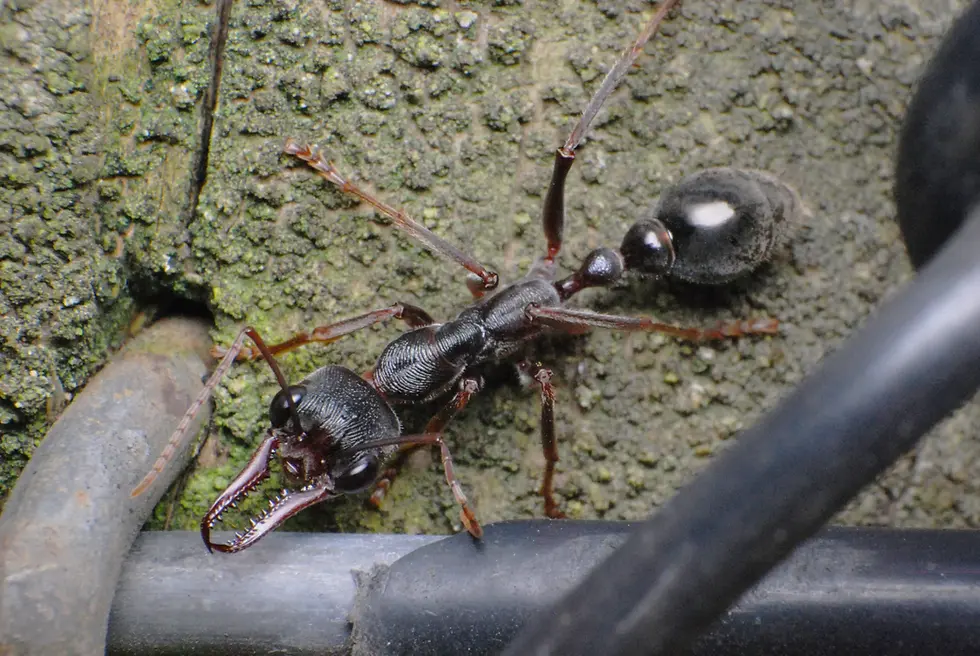
Myrmecia pyriformis is the bull ant that made it into the Guinness World Records as the most dangerous ant in the world. It is large, dark and common in many Australian cities. But there is more to this species than its reputation: its colonies can even survive without a queen.

Names
Myrmecia pyriformis is known as the bull ant, inch ant, black bull ant and brown bulldog ant. The names refer to its dark colour and large size. It was described in 1858 by the British entomologist Frederick Smith, from specimens collected near Melbourne and the Hunter River.
Appearance
Workers are around 14 to 23 mm long and can reach 26 mm, and males measure 18 to 20 mm. The jaws and most of the body are dark red, while the thorax is sometimes blackish brown. It looks a lot like Myrmecia forficata, but is usually larger and darker. Read more about Myrmecia forficata.

Where does it live?
Myrmecia pyriformis is common in many of Australia's major cities, and is mostly seen in the eastern states.
The most dangerous ant in the world?
Guinness World Records has listed Myrmecia pyriformis as the most dangerous ant in the world. Like other bull ants, it can sting repeatedly, and its venom can cause serious allergic reactions in some people. Read more in the bull ant sting.
A colony without a queen
One of the most remarkable things about Myrmecia pyriformis is that its colonies can survive without a queen. Some workers can mate and lay fertilised eggs. Researchers collected a queenless colony in 1998 that kept producing new workers for the next three years. Read more in bull ant colony life.
Active at dusk
Myrmecia pyriformis forages at twilight and at night. A study found that its foraging activity was higher during a full moon than during a new moon, which suggests that moonlight helps these ants find their way. Read more in how bull ants find their way.
Can you keep Myrmecia pyriformis?
Yes, but it is not an ant for beginners. Bull ants are large, fast and have a painful sting. We sell Myrmecia pyriformis from time to time, from legal sources and only for experienced keepers. It is not in stock right now. Before you start, read can you keep bull ants.
More about bull ants
Meet the other giants, Myrmecia gulosa and Myrmecia brevinoda, or see all bull ant species.
Sources
Wikipedia. Myrmecia pyriformis.
Wikipedia. Myrmecia (ant).
National Geographic, 2024. Bull ants navigate by polarized moonlight.
Photos: © Andrew Allen, © Eamonn Culhane, © J. Sayers


Comments