


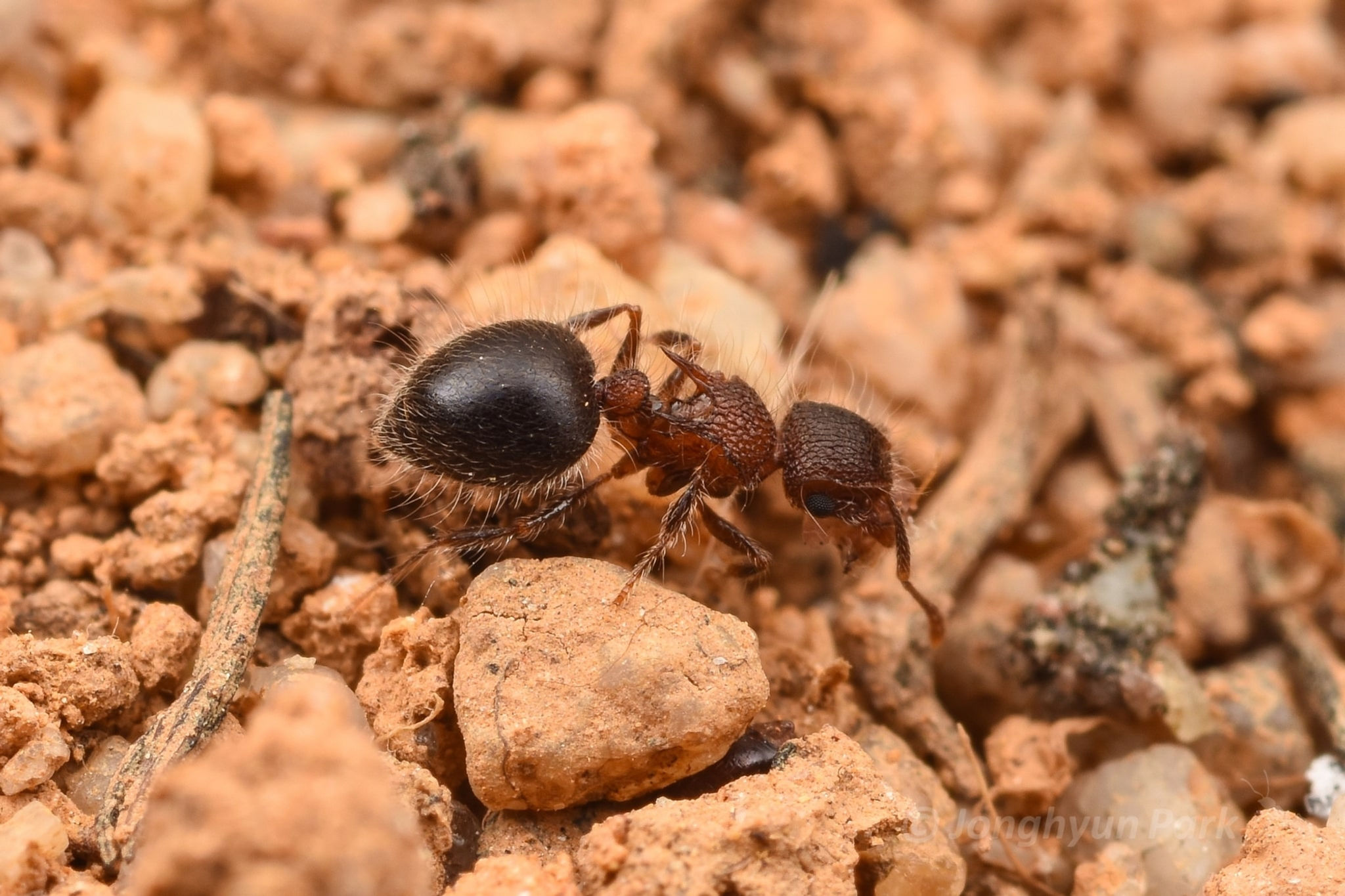

Meranoplus bicolor, commonly known as shield ants, are a charming species native to Southern Asia. They are recognizable by their red bodies and black gasters, with colonies maturing to contain between 500 and 1,000 workers. These ants are notable for their small, fuzzy appearance due to many tiny hairs along their bodies. Workers are typically 3-4 mm in size, while queens range from 7-9 mm.
 Pictures: Jake Martin
Meranoplus bicolor
Meranoplus bicolor ants are endearing and relatively common in their native habitats of Southern Asia. They are slow-growing and non-aggressive, making them a fascinating species to observe. Their unique feature is a modified stinger that can release formic acid when agitated, similar to Crematogaster ants. Despite this, they do not sting, and their bites are harmless.
These ants have a varied diet, accepting a range of foods such as crickets, mealworms, honey, and sugar water. It is crucial to freeze or boil any wild-caught insects before feeding them to the colony to prevent the introduction of mites.
When purchasing a Meranoplus bicolor colony, you can expect to receive a queen with a number of workers. Given their slow growth rate, these ants are ideal for those who prefer a more gradual and steady development. Due to their small size and the colony’s eventual number of workers, these ants are relatively easy to manage in various setups.
Housing
Meranoplus bicolor ants can thrive in several types of nesting environments, including test tube setups, terrariums, and acrylic nests. While not much specific information is available on their preferred nesting conditions, they are generally adaptable to various habitats.
Temperature and Humidity
- Temperature: Maintain a temperature range of 26-28°C to mimic their natural Southern Asian climate.
- Humidity: These ants do not require very high humidity. It is recommended to water their nest once or twice a week and always provide a water test tube in their outworld.
Feeding
Meranoplus bicolor ants have a varied diet and will accept most foods, including:
- Insects: Crickets and mealworms (ensure wild insects are sterilized by freezing or boiling).
- Sugars: Honey and sugar water.
Hibernation
These ants do not require a diapause, making them active year-round. This simplifies their care as they do not need a period of dormancy.
Observing Meranoplus bicolor
Observing Meranoplus bicolor can be a delightful experience due to their non-aggressive nature and fuzzy appearance. Their modified stinger that releases formic acid when threatened adds an interesting aspect to their behavior. Despite their slow growth, their colonies can reach up to 1,000 workers, providing ample opportunity to study their social dynamics and foraging behaviors.
Quick Facts
- Scientific Name: Meranoplus bicolor
- Common Name: Shield ants
- Queen Size: 7-9 mm
- Worker Size: 3-4 mm
- Color: Red bodies with black gasters
- Temperature: 26-28°C
- Humidity: Moderate (water nest once or twice a week)
- Diet: Insects (crickets, mealworms), honey, sugar water
- Colony Size: 500-1,000 workers
- Sting/Bite: No sting; bites are harmless but can release formic acid
By providing the appropriate conditions and a varied diet, you can enjoy the captivating presence of Meranoplus bicolor ants in your collection. Their slow growth and non-aggressive nature make them an excellent choice for both novice and experienced ant keepers.


