


Ant Brains Get Energy First, Even When the Ant Is Starving
Updated: 1 day ago
Your brain makes up only about 2 percent of your body weight, yet it burns around a fifth of your energy. A new study shows that ants do something very similar. Researchers at Boston University found that the brain of a pavement ant worker uses a quarter of the ant's energy, and that the brain keeps getting that energy even when the ant is starving. The study was published in October 2026 in the journal PNAS.
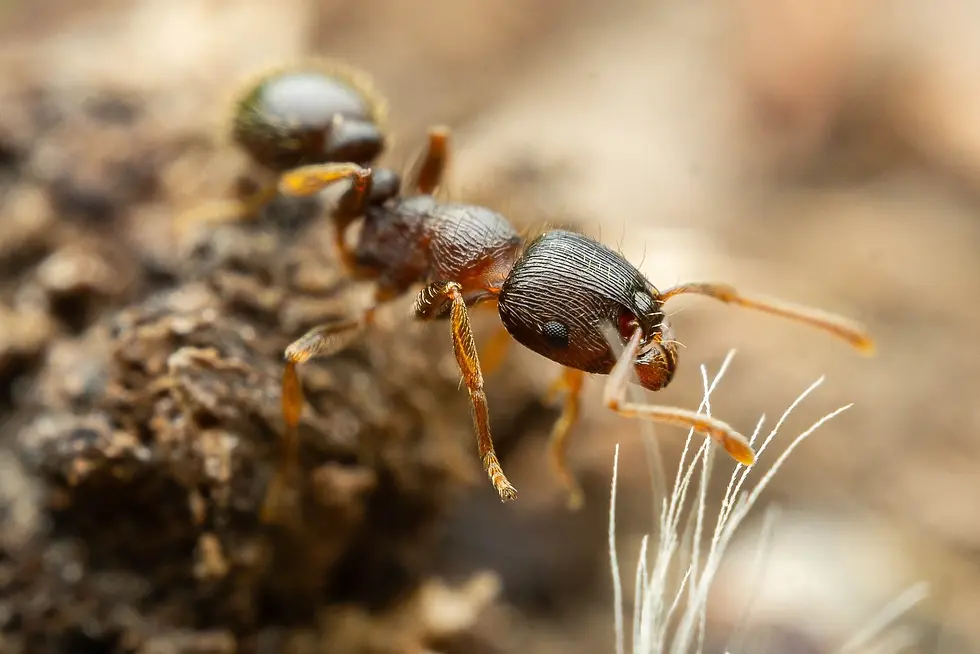
A small brain with a big appetite
Zachary Coto and James Traniello measured the energy use of the brain and of the whole body in worker ants directly, something that is hard to do in humans and other mammals. The brain of a worker makes up about 5 percent of her body weight but uses roughly 25 percent of her energy. That is close to the pattern in mammals. The researchers also scaled data from humans and other mammals down to the size of an ant, and that model predicted the ants' brain energy use surprisingly well. In other words: a smaller brain is not automatically a cheaper brain. Curious how an ant brain is built? Read do ants have a brain and a heart?, or see how another Boston University study looked at the brains of Dracula ants.
The brain comes first
Next, the team put workers under stress, including starvation. The energy use of the whole body dropped, but the energy use of the brain did not drop significantly. As a result, the share of energy going to the brain nearly doubled. Starved workers still recognised their nestmates and defended the colony just as well as well-fed workers.
This matches the "selfish brain" idea from human biology: when energy runs low, the brain claims priority over other organs to keep its most important functions going. "Our finding that ants allocate no less energy to operate their brains than humans is surprising," the researchers write.
What it means for ant keepers
For a colony, recognising nestmates and defending the nest are vital. Because workers keep those skills even when food is scarce, the colony stays safe during lean times. In your formicarium, it is a reminder that a colony can go through a hungry period without falling apart. That is no reason to skip feeding, of course: brood still needs protein to grow. Read more in our post about what ants eat.
Pavement ants are one of the easiest species to start with. Want to keep them yourself? Have a look at our Tetramorium caespitum colonies. In the US? Read the pavement ant care guide on our US store.
Sources
Coto, Z. and Traniello, J., 2026. PNAS. EurekAlert! news release.
Boston University. What ants can teach us about our brains.
Photo: © Jake Nitta


Comments