


Do Ants Have a Brain and a Heart?
Updated: 1d
Ants solve problems, find their way and work together in colonies of thousands. So they must have a brain? They do, and they have a heart too. But both look very different from ours.

A tiny but busy brain
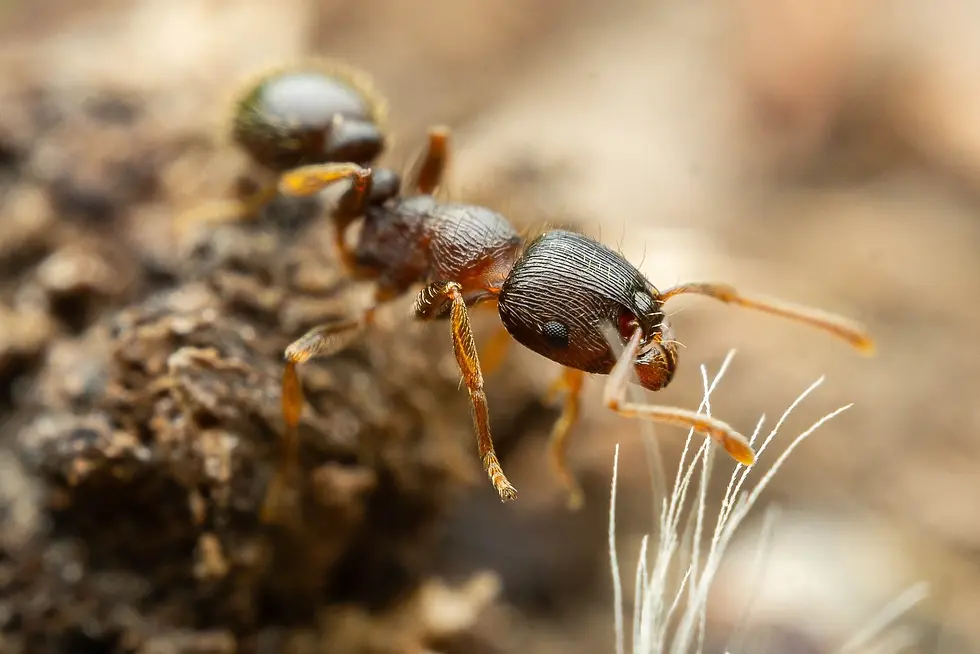
An ant brain sits in its head and is smaller than a grain of sand. An often quoted estimate is that it contains roughly a quarter of a million nerve cells, compared with billions in a human brain. The most important parts are the mushroom bodies, which help with learning and memory, and the parts that process smells from the antennae. Besides the brain, an ant has a chain of small nerve centres along its body.
That small brain is expensive to run. A 2026 study showed that the brain of a worker uses about a quarter of her energy. Read more in ant brains get energy first.
A heart like a tube
Ants do have a heart, but it is a long tube that runs along the top of the body. It pumps blood forward towards the head. From there the blood flows freely between the organs and slowly back again. This is called an open circulation: there are no veins and arteries like ours.
Colourless blood
Ant blood is called hemolymph. It is not red, but clear to slightly yellow or green. That is because it does not transport oxygen. It mainly carries food, hormones and waste.
Breathing without lungs
Ants have no lungs. Along the sides of their body are tiny openings called spiracles. Air flows from there through a network of thin tubes straight to the cells. This system works well for small animals, and it is one of the reasons insects cannot become as big as a dog.
Want to see these tiny bodies at work up close? With our ant starter kit you can watch a real colony at home. For more surprising facts, read how old can an ant get?.
Photo: © Jakub Šidlík


Comments