


Dracula Ants Go Hunting on Their First Day
Updated: 1 day ago
In most ant colonies, a new worker starts her life indoors. She looks after the brood and the queen first, and only later, when she is older, goes out to forage. A small group of ants skips that step completely. New research from Boston University shows how the Dracula ant Stigmatomma pallipes manages to go hunting on the very first day of its adult life. The study appeared in October 2026 in Proceedings of the Royal Society B.
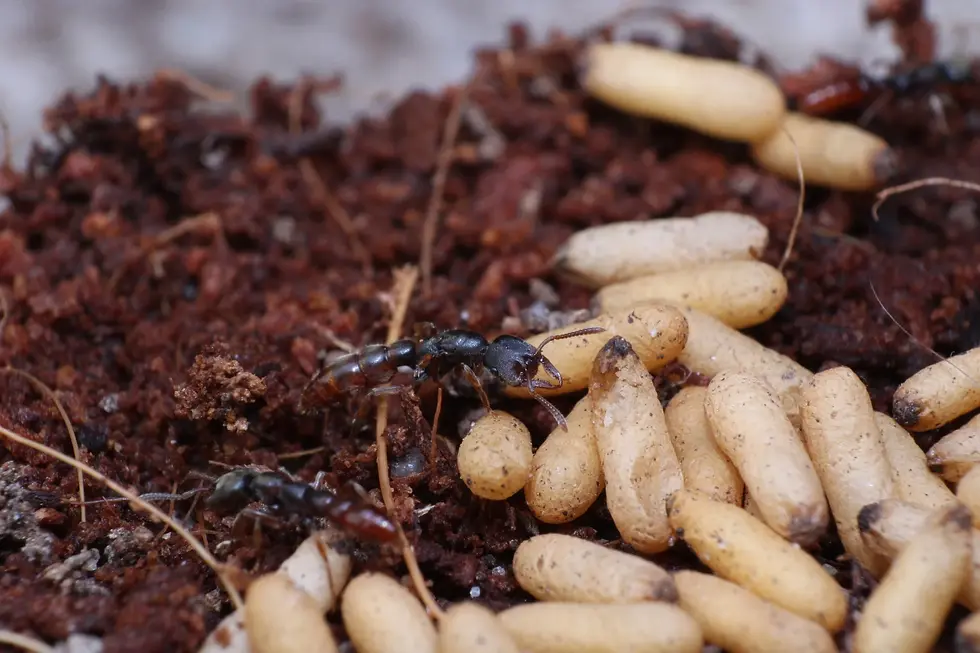
Meet the Dracula ant
Stigmatomma pallipes is a small, secretive ant from North America that lives in colonies of fewer than 20 workers. It owes its nickname to an unusual habit: the adults feed on the hemolymph (insect blood) of their own larvae. They make a small wound and drink a little, without killing the larva. The species hunts centipedes and other soil animals.
Back in 1978, ant researcher James Traniello described in the journal Science that these ants do not change jobs as they age. Young workers hunt just like old ones.
A brain that is ready before birth
Frank Azorsa and his colleagues wanted to know how that is possible. They dissected the brains of pupae, young workers and older workers, stained them and made 3D images under the microscope. The result: the brain and most of its specialised regions are already fully grown during the pupal stage, before the ant even leaves its cocoon. In most other ants, the brain keeps growing and developing after the adult emerges.
That does not mean the brain is finished. The researchers found that the density of connections between brain cells still changes between young and older workers, especially in the mushroom bodies, the parts of the brain involved in learning and memory. So the brain arrives ready to use, and keeps fine-tuning itself afterwards. They also found that a longer development time goes together with this early, ready-to-go brain.
Why it matters
Early foraging has now been found in at least six ant species. This study shows one way it can work: by investing more time in development before birth, the colony gets workers that can hunt from day one. In such a tiny colony, that can make a big difference.
Curious about other ants with remarkable lifestyles? Read our 10 bizarre ant facts. Or read how another Boston University study found that ant brains get energy first, even when the ant is starving.
Sources
Azorsa, F. et al., 2026. Proceedings of the Royal Society B. DOI 10.1098/rspb.2026.1297.
Phys.org, 2026. Why some young ants start hunting and caring for others early.
Photo: © Connor Cashman


Comments