


Ant Safari in Uganda: 15 Ant Species on Kalangala
Bijgewerkt op: 1 dag geleden

Because of my love for ants, I have always wanted to go out into nature and look for them in the wild. With a busy schedule, even on holiday, there is rarely time for it. In November 2026 we finally made that time. My girlfriend and I visited Kalangala, a beautiful island in Lake Victoria, Uganda, and went on our own ant safari. In a few walks we found around 15 different ants, from golden spiny ants to a column of driver ants.
We did not collect a single ant. We only wanted to watch and photograph them. Just as important: very few ants from Uganda have been recorded on iNaturalist so far, so we uploaded every find as an observation. You can see all of them on our iNaturalist profile, where experts can help identify them to species level.
Kalangala and our hunting ground

Kalangala lies on Bugala, the largest of the Ssese Islands in Lake Victoria, and is a favourite spot for anyone who loves nature. Next to our hotel, a new road was being built deep into the forest. That turned out to be the perfect place to look for ants. You cannot just wander into dense tropical forest: snakes are everywhere, and spiders, flies and mosquitoes will find you quickly. The fresh road gave us a safe, open path, with forest and fallen wood on both sides and plenty of exposed soil, logs and bark to search.
Honestly, I was not well equipped for this. Everything was shot with a Panasonic Lumix DMC-FZ2000 and a Raynox clip-on macro lens, not a real macro camera, so the small ants were a challenge.
Driver ants: the famous safari ants
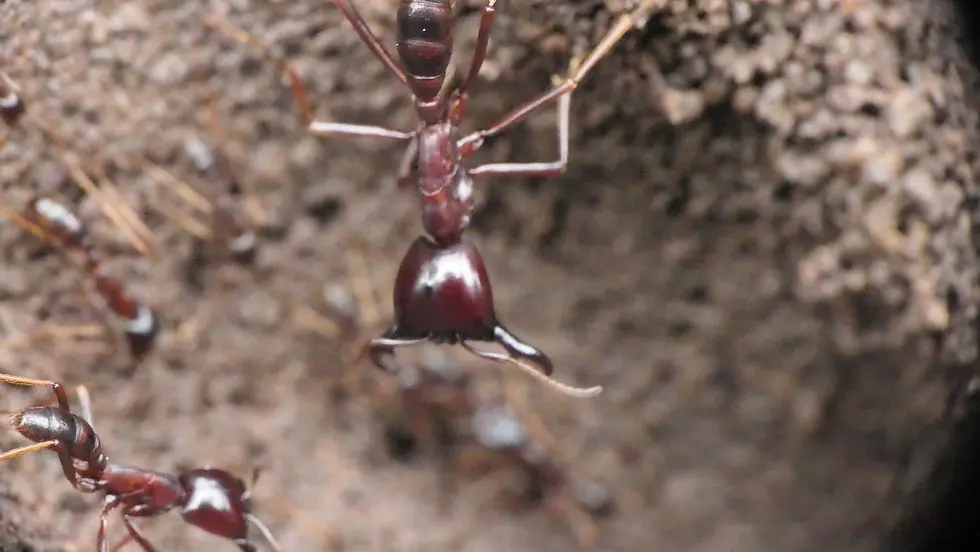
The highlight was a column of driver ants, Dorylus wilverthi, crossing the road. These blind hunters live in colonies of millions and move through the forest in long streams, with large soldiers guarding the edges. Read all about them in our post about safari ants and driver ants.


Golden and silver spiny ants
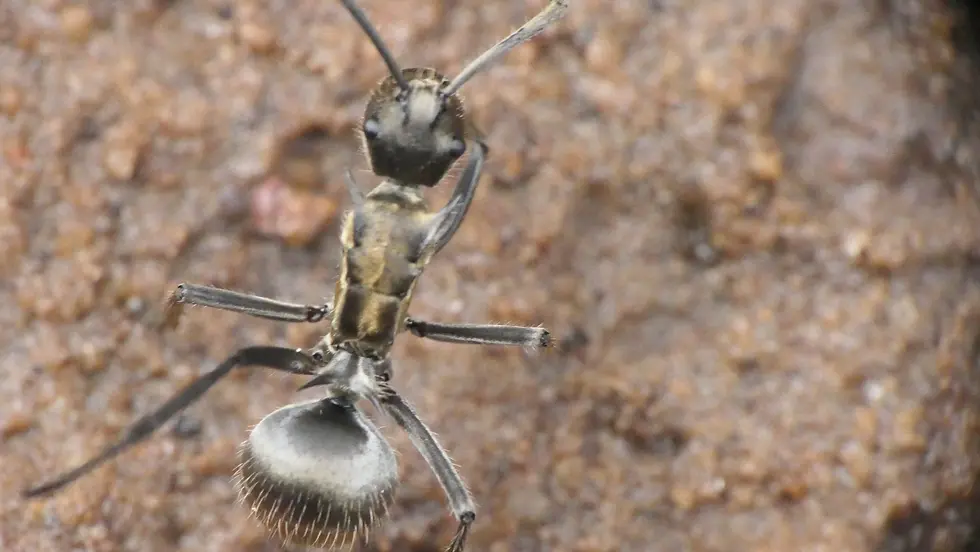
Spiny ants of the genus Polyrhachis were everywhere. They get their name from the sharp spines on their back. The most beautiful one had a shining golden gaster that lit up in the sun. A second Polyrhachis species looked almost the same but had a silvery gaster. Both are still waiting for a species name on iNaturalist.


Turtle-like ants in hollow twigs
In dead, hollow twigs we found shiny black ants with a flat, armoured body. They block the entrance of their nest with their own heads. These are most likely Cataulacus, an African and Asian genus that lives in trees and looks a lot like the turtle ants of the Americas.


The African stink ant
Paltothyreus tarsatus is a big, black ponerine ant from tropical Africa. It is known as the African stink ant because of the strong smell it gives off, and it hunts termites. This was one of the few ants that already got a confirmed species ID on iNaturalist. Read more in our post about the African stink ant.


And many more
We also found:
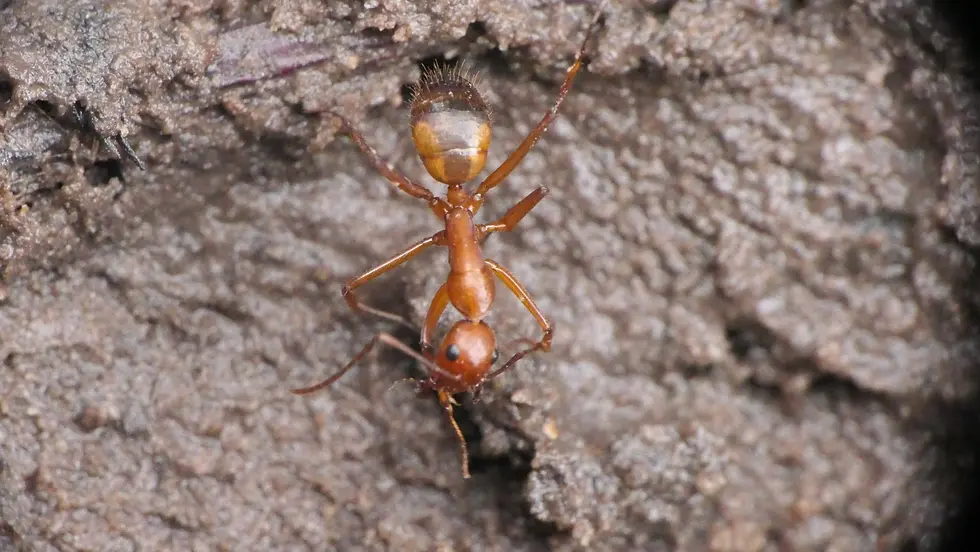
A bright orange Camponotus
Crematogaster clariventris biimpressa, black with a reddish brown gaster, confirmed on iNaturalist
Trap-jaw ants (Odontomachus) along a road in Kampala
Tetramorium, a ponerine ant, a slender Pseudomyrmecinae ant near Entebbe and some tiny ants of only 2 to 3 mm
Not an ant, but a great find: Myrmarachne, a spider that mimics ants

We also came across termites, which brings us to a fun fact. In Luganda, the language spoken around Kalangala, ants and termites share the same name: enswa. Read more about the termites people eat in Uganda in White Ants Are Not Ants.

What is next?

This trip made me want to do it again. We will keep an eye on iNaturalist to see which species our ants turn out to be. Some of the most special finds already have their own post: the African stink ant, safari ants and driver ants and how driver ants hunt. Would you like to see which African ants you can keep yourself? Have a look at Messor cephalotes, the giant harvester ant from East Africa. Or try Messor barbarus, a harvester ant from Southern Europe and North Africa.
Photos: © Esthetic Ants

Opmerkingen