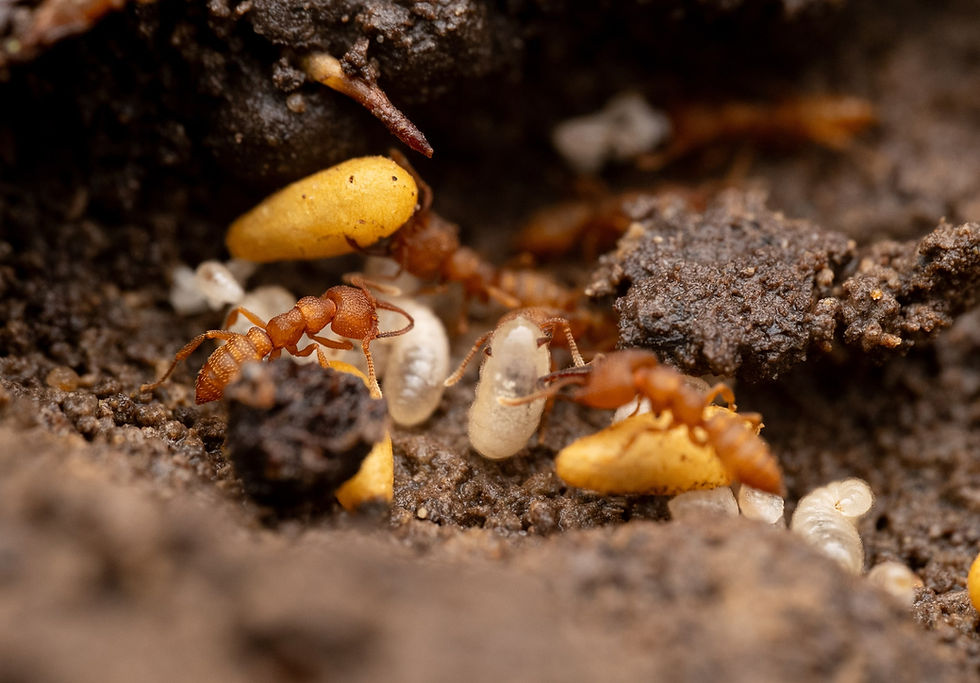
Polyrhachis bicolor is a species of ant belonging to the formicine genus Polyrhachis. It is found across a range extending from Australia up through Southeast Asia and toward southern China. It is a part of a group known for arboreal nesting behaviour (tree- or shrub-dwelling nests). The species exhibits striking colouration: workers often have contrasting colours with a darker body combined with lighter or reddish portions (for example, the back of the abdomen, antenna tips, etc.). It is a medium-sized Polyrhachis compared to some of the larger weaver or spiny ants.
Polyrhachis bicolor
-
Habitat & nest structure
Polyrhachis bicolor builds nests in vegetation (arboreal nests), often using plant material and sometimes incorporating silk or weaving behaviour. Their nests may be in leaves or in folded or stitched leaves using larval silk, or made within plant structures in shrubs or trees. Because they are arboreal, they spend much of their life off the ground. -
Feeding / foraging behaviour
They forage on vegetation and in trees, exploring branches, leaves, etc. Their diet likely consists of small invertebrates, honeydew from sap-sucking insects, plant exudates, and perhaps sugary sources. They may not be as aggressive or bold as ground-hunters, being more adapted to navigating foliage. -
Colony size & social structure
Colonies tend to be smaller to moderate in size, especially constrained by the space in arboreal nests. Workers are likely of a uniform caste (no extreme polymorphism), with a queen or reproductive at the core. Growth is subject to the limitations of arboreal nesting (space, nest stability, resource access). -
Defence & special traits
As a formicine ant, P. bicolor does not have a sting but defends itself by biting and releasing formic acid (through an acidopore). Their arboreal lifestyle gives them access to elevated vantage points. Also, some subspecies have spines or hairs that assist in camouflage or protection.
-