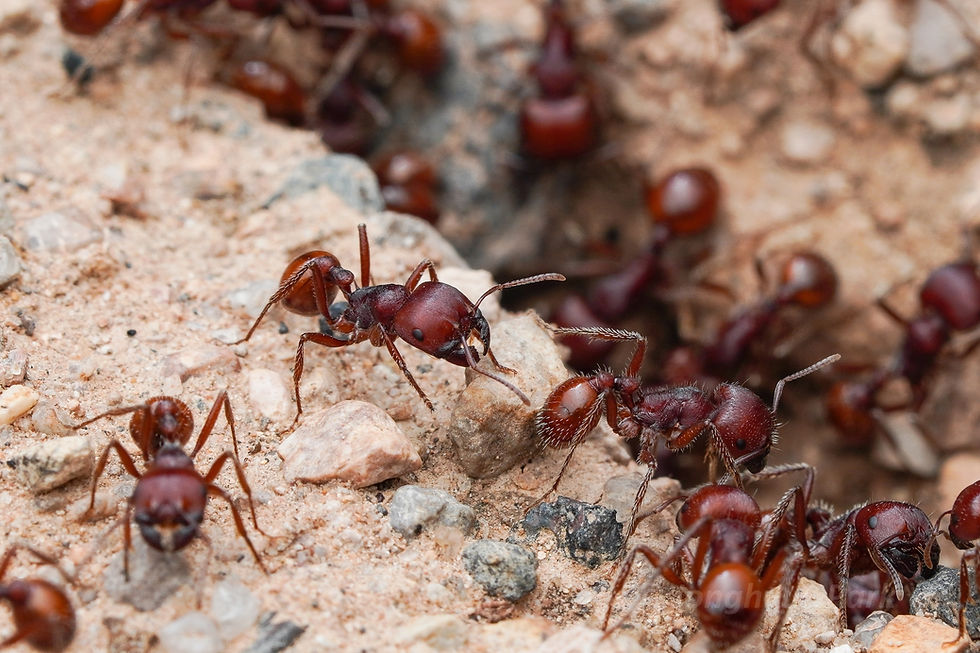
Pogonomyrmex californicus, commonly known as the California harvester ant, is a fascinating ant species native to the southwestern United States and northern Mexico. These ants are well-known for their unique nesting behavior and adaptability to arid environments, making them a popular choice among ant enthusiasts.
Pogonomyrmex californicus bicolor
Colony Structure and Reproduction: Pogonomyrmex californicus colonies are facultatively polygynous, meaning they can have multiple queens. However, most colonies are founded and sustained by a single queen. Occasionally, multiple queens cooperate in colony founding, a phenomenon known as pleometrosis. Reproduction peaks around July when reproductive individuals are present.
Size and Appearance: Queens of Pogonomyrmex californicus range from 10-13mm, while workers are smaller, typically measuring 6-9mm. These ants are characterized by their ferruginous red color, with coarse cephalic and thoracic rugae. The interspaces are strongly shining and faintly punctate. The petiolar node is short, broad, and features a prominent nipple with a steep anterior declivity.
Feeding Behavior: Pogonomyrmex californicus ants are primarily seed harvesters but also prey on arthropods such as raisin moth larvae. They forage during the day, either individually or in groups, forming columns. They require a diet of seeds, nuts, grains, protein, and water. Chia seeds should be available at all times, as they consume more seeds than other harvester ant species like Messor.
Activity and Habitat: These ants are found in open, warm, and sandy areas, often constructing nests with entrances surrounded by loose sand arranged in a circular or semicircular pattern. Their nests are deep, enabling them to access the water table and maintain high humidity. In the wild, nest tunnels can be up to 65 meters from the entrance, which helps in defense and food storage.
Temperature and Humidity: Pogonomyrmex californicus thrives in temperatures between 28-31°C. Their nests require humidity levels of 60-75%. Although they do not undergo true hibernation, they benefit from a diapause period of 2-3 months at around 15°C to stimulate brood production.
Purchasing from Esthetic Ants: When buying a Pogonomyrmex californicus colony, Esthetic Ants is a reputable choice. They provide colonies housed in secure tubes, ensuring safe delivery. Esthetic Ants is known for offering healthy, well-established colonies with comprehensive care instructions.
Quality and Support: Esthetic Ants offers detailed guidance on caring for Pogonomyrmex californicus, ensuring that enthusiasts have the necessary knowledge to maintain a thriving colony. Their after-sales support is highly regarded, providing ongoing assistance to address any issues that may arise.
Successfully keeping Pogonomyrmex californicus requires attention to their specific needs:
Housing: Use a formicarium suitable for ants that prefer sandy or earthy substrates. Ensure the nest is deep enough to maintain high humidity and mimic their natural environment. Regular maintenance is crucial to prevent escapes and ensure the ants' well-being.
Feeding: Provide a varied diet including seeds, nuts, grains, and protein sources such as insects. Ensure a consistent supply of water. Foraging trails can be extensive, so it's essential to provide ample food to sustain their large colonies.
Temperature and Humidity: Maintain nest temperatures between 28-31°C and humidity levels of 60-75%. Proper ventilation is crucial to prevent mold growth. Adjust humidity and temperature based on the ants' behavior and needs.
Safety: Pogonomyrmex californicus ants have a venomous sting, which can be very painful. Handle them with care, using tools like forceps or paintbrushes to minimize direct contact and stress on the ants.
By understanding and catering to their specific needs, you can ensure the health and well-being of your Pogonomyrmex californicus colony, making them a fascinating addition to your ant collection.