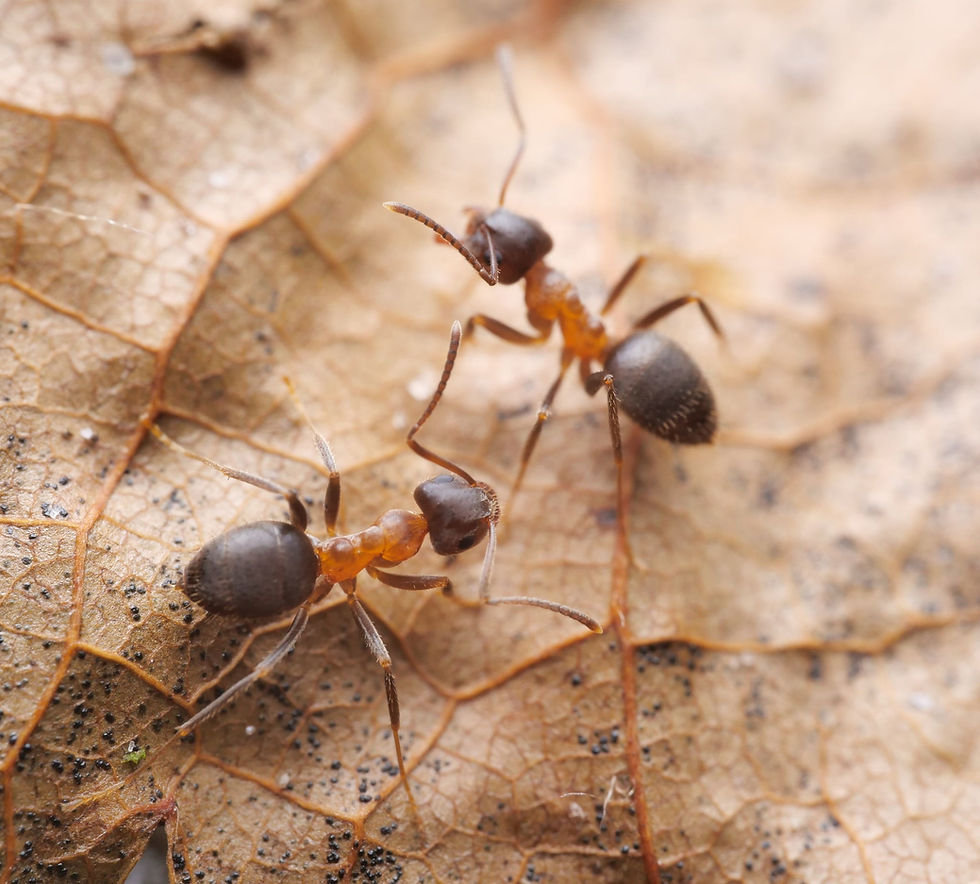
Myrmica ruginodis
Myrmica is a European species also known as the fire ants. They pack a serious sting and are agressive ants.
Myrmica likes to nest under rocks and wet rotten wood. They can also nest in soil.
These ants are polygenus which means their can be multiple queens inside a nest. Not all queens have an egg laying function and will 'work' as normal workers inside the nest. This means Myrmica colonies can grow big but usually won't grow bigger then around 10.000 workers.
At the founding stage Myrmica is semi-clausteral meaning they go out and forage for food before the first workers arrived. These ants are agressive and are quite large. Queens are between 7-12 mm and workers are 5-8mm.
These ants have a diapause when the temperature drops outside. Usually from November until March.
General
Caring for Myrmica is easy but there are a few things you need to know before you start.Food
Myrmica are not picky eaters. They love sugars that come from fruit, sugarwater or ant jellys. For protein the best food for them is fruitflies, mealworms, crickets and other smaller insects.If you feed insects from the wild freeze or boil these insects to sterilize them. Skipping this step can introduce mites to your colony.
Queens are semi-clausteral meaning they forage for food and need to be fed in the founding stage. Myrmica is known to have a very small social stomach and its better to feed them small amounts often.
These ants can die of dehydration pretty fast so make sure you always offer them an external watersource like a test tube or liquid feeder.
Humidity
Myrmica needs high humidity. Hydrating the nest partially is more then enough but hydrate it reguarly. These ants are prone to dry out.Temperature
Myrmica does not need to be heated and it is fine to keep them at room temperature. You can optionally heat a part of the nest.Hibernation
Myrmica has a diapause from November until MarchSting/bite
These ants can sting and it can hurt. If you are allergic to ant stings it is recommended to wear gloves.Myrmica ruginodiswill do well in most formicarium or ant farms. The Esthetic Ants nests are all perfect for this species and your ants will trive in them. Be sure that their is enough humidity inside the nest, wooden nest or dry 3D-printed nests aren't recommended.