


Mystrium camillae Care Guide: Keeping the Snap-Jaw Dracula Ant
Mystrium camillae is one of the strangest ants you can keep. It is a snap-jaw Dracula ant from the humid forests of Southeast Asia and northern Australia: a small, slow, hidden predator whose jaws strike faster than almost anything else in nature, and whose adults drink the body fluid of their own larvae. This care guide explains how to keep it well and whether it suits you. You will notice that we rarely give exact numbers. Every colony develops differently, so we explain what to look for instead.

Mystrium camillae at a glance
Origin: the Indo-Australian region, from northern Australia and New Guinea to mainland Southeast Asia
Colony type: small colonies, sometimes with more than one egg layer
Growth: slow
Temperature: tropical, warm all year
Winter rest: none
Humidity: humid, with one slightly drier area
Diet: live or freshly killed insects; sugar is often ignored
Difficulty: advanced
Appearance and size
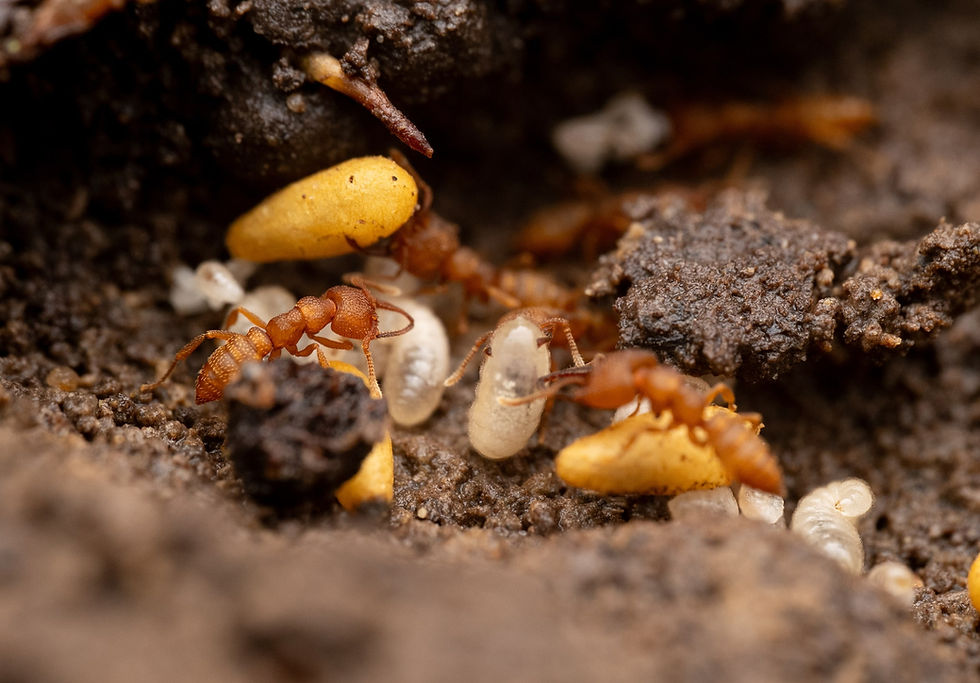
Workers are yellowish brown to reddish brown, roughly 5 to 8 mm long, with a wide, flat head and long, slender mandibles that touch at the tips. Size varies a little within one colony. The queen is somewhat larger. They walk slowly and carefully, which makes them look calm compared to most ants, until they snap.
The fastest jaws in the animal world
The snap of Mystrium camillae works like snapping your fingers. The ant presses the tips of its mandibles together and builds up tension until one mandible slides past the other. All the stored energy is released at once, in a strike that researchers measured as one of the fastest movements of any animal. They use it to stun prey and to defend the nest. In a setup you will rarely see it, but it is the reason this species is famous.
Why they are called Dracula ants
Adults of Mystrium, like their relatives in the subfamily Amblyoponinae, practise larval hemolymph feeding. A worker or queen makes a small wound in a larva and drinks a little of its body fluid. The larva survives and keeps growing. Because prey is hard to find in nature, this works as a living food store between hunts. If you want to read more about this group, see our story on another Dracula ant that goes hunting on its first day.
Colony structure and founding
The way Mystrium reproduces is unusual and can differ between colonies. Next to normal winged queens, some colonies have wingless, worker-like reproductives, and a colony can contain more than one egg layer. Founding a colony from a single fresh queen is difficult, so most keepers start with a queen and some workers. Keep a small colony in a test tube or a small nest, dark and warm, and leave it alone as much as possible while it settles in.
Growth
This is a slow species, and colonies stay small compared with most ants. Mature colonies usually have dozens to a few hundred workers. How quickly a colony grows depends on warmth, steady food, calm and the colony itself. Do not judge a colony by its first weeks: a quiet colony with healthy brood is doing well.
Temperature and heating
Mystrium camillae is tropical and needs warmth all year. A warm room is a good start, but in most homes extra heating helps. Lay a heat mat or heat cable on top of part of the nest, never underneath, because heat from below causes condensation. Leave a cooler part so the colony can choose, and watch where the ants put their brood: that tells you more than any thermometer. The setting on the heater is not the temperature inside the nest. Our guide on how to heat an ant nest explains this in more detail.
Winter rest
There is no winter rest. Keep the colony warm and fed through the winter, just like the rest of the year.
Humidity and water
These ants come from damp soil and rotting wood, so the nest should be humid. Keep a large part of it moist and hydrate regularly, but never so much that water stands in the chambers. Leave one slightly drier area. Water drops, condensation or mould mean it is too wet; ants crowding into the wettest corner mean it is time to add water. Always provide drinking water.
Feeding
This is a specialist predator. In nature it mainly hunts soil animals such as centipedes. In captivity, small and soft feeder insects usually work: pieces of cricket, small cockroach nymphs, fruit flies and soft larvae. Live or freshly killed prey is best. Offer small portions close to the nest entrance, because foragers rarely travel far, and adjust the amount to the size of your colony. Sugar water is often ignored; you can offer a tiny drop now and then, but protein is what the colony depends on. Remove leftovers before they mould. Our tips on preparing feeder insects help here.
Housing
Choose a small, dark, humid nest that matches the colony size. Too much space makes it harder to keep the nest moist and the colony calm. A test tube with plenty of water works for a queen with a few workers. As the colony grows, a small nest such as The Nano Nest or a Founding Ytong Nest is a good next step, with a small outworld like The Mini Outworld. Keep the nest covered so it stays dark. A thin layer of substrate or a piece of bark in the outworld gives foragers a place to hide.
Behaviour, stinging and escapes
Mystrium camillae is calm and rarely runs around in the open. Expect a quiet outworld and most activity inside the nest. They are sensitive to disturbance: open and move the setup as little as possible, because a stressed colony may eat or abandon brood. Workers can sting and the snap of the mandibles can be felt as a sharp tap, but they are not aggressive. They are slow and not known as escape artists, though a good anti-escape barrier is always wise. Use tweezers when you work in the setup.
Is Mystrium camillae right for you?
This is not a beginner species. It needs steady tropical warmth, a humid nest without mould, live or fresh insect food and a lot of patience, and it rewards you with rare behaviour rather than a busy outworld. If you already keep a tropical species well and want something truly unusual, it is a great choice. See our Mystrium camillae colonies (not always in stock). For a similar hunter with more visible behaviour, read our Diacamma care guide.
New to keeping ants? Start with our Ant Keeping Starter Set and the guide on how to start keeping ants first, and come back to Mystrium once you have some experience.


Comments