


Why Do Ants Walk in a Line?
Updated: 1 day ago
Leave a crumb on the kitchen counter and within an hour there may be a neat line of ants walking to it and back. How do they know where to go, and why do they all walk the same way? The answer is scent.
A road made of scent
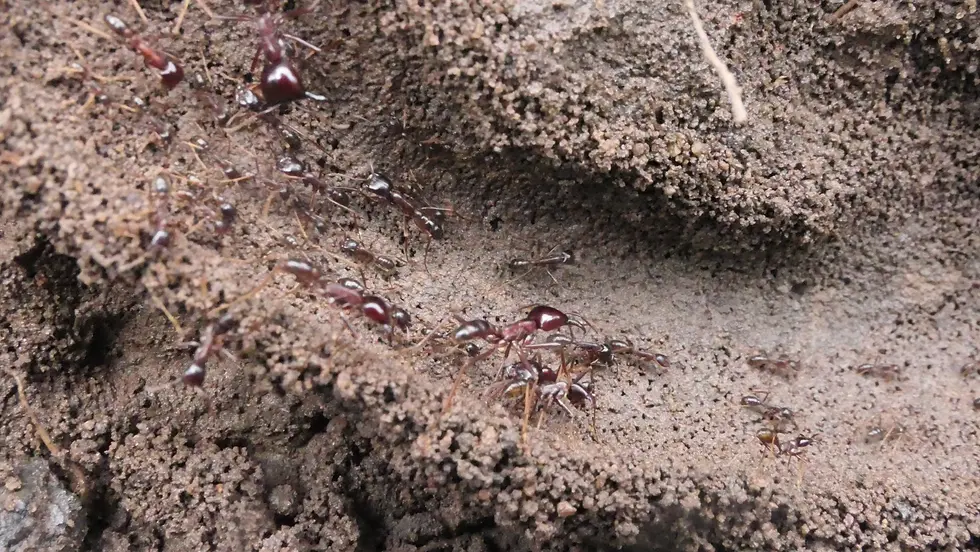
When a worker finds food, she walks back to the nest and leaves a scent trail on the way. That scent is a pheromone, a chemical signal made in a gland in her body. Other workers smell the trail with their antennae and follow it to the food. On their way back they add their own scent, so the trail gets stronger and more ants join in. Scent trails are just one way ants share information. Read more in how do ants communicate?.
How ants find the shortest route
If there are two routes to the food, the ants that take the shorter one return sooner and add scent more often. That trail gets stronger faster, so more ants choose it. After a while almost the whole colony uses the shortest way, without any ant knowing the map. This smart system has even inspired computer programs that plan routes.
When the food is gone
A scent trail fades over time. When the food is gone, ants stop adding scent and the trail slowly disappears. That is why a line of ants vanishes again once the crumbs are cleaned up. Wiping the counter with soapy water also removes the trail. Ants in your kitchen? With the sugar trick and dish soap method you can gently send them elsewhere.
The ant death spiral
Sometimes following the trail goes wrong. Army ants are blind and rely completely on scent. If a group loses the main trail, they can start following each other in a big circle, round and round, until they are exhausted. This is called an ant mill or death spiral. Read more about these blind hunters in how driver ants hunt.
Watch it in your own formicarium
In a formicarium you can see trails form too. Put food at one end of the outworld and watch how the first scout finds it and how the others follow soon after. Tips for a good setup are in how to set up an outworld for your ant colony.
Photo: © Esthetic Ants


Comments