


How to Ant-Proof Your Home Without Harming a Single Ant
Updated: Oct 14
Every summer, ant colonies shift into their busiest phase. Queens lay eggs at full speed, worker numbers swell, and foragers fan out in search of food to fuel the growth. Your kitchen is interesting to them - a mix of sugars, proteins, and moisture that a growing colony needs. The result is that familiar trail across your counter or window sill.
The good news is that keeping ants out of your home is straightforward, and none of the most effective methods involve harming them. Here's how to do it properly.

Find Out Where They're Getting In
Before anything else, figure out the entry points. Follow the trail back to where the ants are coming from. Look for small gaps around window frames, door frames, pipes, and where cables enter the wall. Ants are small, but they do need a physical opening - they can't walk through solid material. Even a thin crack in a sealant line is enough.
Once you've found the gaps, seal them with silicone sealant, putty, or weatherstrip foam. This is the most reliable long-term fix. Door sweeps are worth checking too - a worn rubber seal at the bottom of a door is one of the most common ways ants get in. Replacing one takes minutes and makes a real difference.
Block the Routes They're Already Using
Even before you've finished sealing everything, you can interrupt the existing trails. Ants follow pheromone scent markers left by other foragers. Clean surfaces where you see ant trails with soapy water - this removes the scent and breaks up the trail. Ants that were following it will lose the signal and many will turn back.
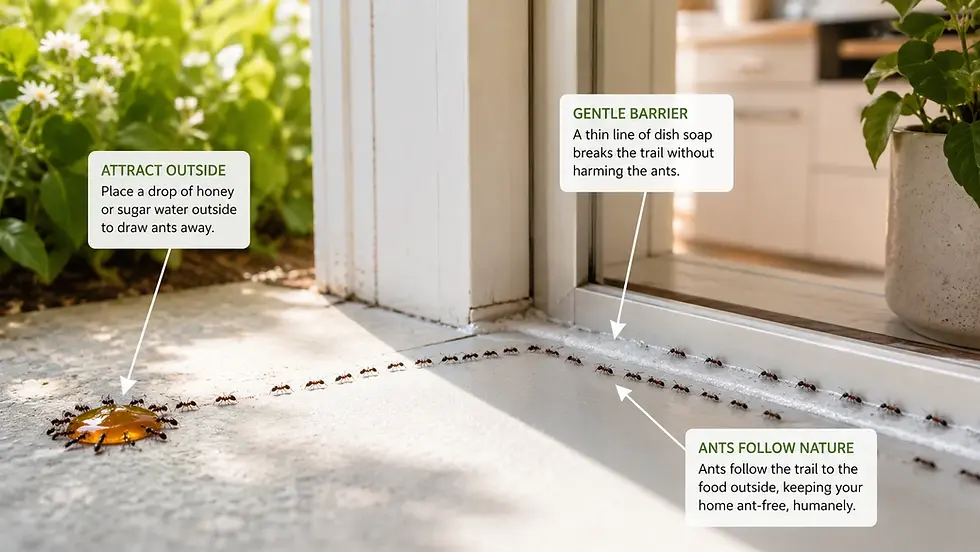
You can also draw a thin line of washing-up liquid across a trail or along a doorway. Dish soap disrupts the chemical signals ants use to navigate, and they won't cross it. Apply it with a finger or a cotton bud, and reapply when it dries out or gets washed away.
Give Them Something at the Door
Here's a trick that works surprisingly well. Place a small drop of honey or sugar water right at the entry point, but on the outside of your home. Foragers find food right at the doorstep and start collecting it there. They don't need to go further. The trail concentrates at that spot instead of continuing deeper into your house.
This works because foragers stop as soon as they find food. When they find it immediately, the trail stops there. Sugar water works particularly well - it's one of the primary energy sources ant colonies rely on, and you can read more about why in Sugar Water: The Hidden Superfood for Ants. Once activity at the entry point settles, seal the gap and remove the sugar source. The trail fades without reinforcement and the ants move on.
Why It's Worth the Effort
Pesticides and traps work, but they kill animals that are doing nothing wrong. Ants play a real role in the ecosystem: they aerate soil, recycle nutrients, and in many cases keep populations of other insects in check. The species most likely to enter your home in summer is Lasius niger, the common black garden ant - the same species that's popular among ant keepers because they're hardy and fascinating to observe. Once redirected, they'll leave your home alone and get on with their work outside.


Comments