


Mold in Your Ant Nest: Why It Happens and What to Do
Mold is one of the most common problems ant keepers run into, especially with young colonies and setups that stay humid. Most of the time it is not a disaster but a sign that something in the setup needs a small change. This guide explains where mold comes from, when you need to act and how to keep it from coming back.
Where Does Mold Come From?
Mold spores are everywhere: in the air, on food and on the ants themselves. They only start to grow when moisture, something to feed on and still air come together. In an ant setup that usually means leftover food, dead insects or a nest that stays too wet for too long. A strong colony keeps its nest clean and often deals with a little mold on its own. A small colony, or a founding queen alone in a test tube, cannot do that as well.
The Most Common Causes
Leftover protein. Pieces of cricket, mealworm or fruit fly that the ants did not finish are the number one cause.
Spilled sugar water or honey. Sticky drops in the outworld are a perfect place for mold to start.
A nest that is too wet. Water drops, condensation or wet stains that never dry mean the nest gets more water than the colony needs.
Heat from below. A heat mat under the nest pulls moisture up and causes condensation. Always heat from above, on top of part of the nest.
The trash corner. Ants pile waste, dead nestmates and food remains in one spot. If that spot is also damp, mold follows.
Old cotton in a test tube. Wet cotton slowly turns grey or green, especially when a queen has been in the same tube for a long time.
Is Mold Dangerous for My Ants?
A bit of white fluff on a food item in the outworld is no reason to panic. Take the food out and the problem is usually gone. Mold becomes a real risk when it grows inside the nest chambers, close to the brood, or when it spreads faster than the ants can clean it up. Some molds can infect larvae, pupae and even adult ants, and a founding queen has no workers to help her keep it under control. In those cases you need to step in.
What to Do When You Find Mold
In the outworld
Remove moldy food and waste with tweezers or a cotton swab, wipe the spot with a damp tissue and let it dry. Check where your ants put their trash and clean that corner more often. A Mini Outworld Liquid Feeder keeps sugar water in one place, so you avoid sticky spills on the floor of the outworld.
In the nest
A small spot in an empty chamber can usually be left to the colony, as long as you take away the cause: give less water, never leave food inside the nest and make sure some fresh air can get in. If mold grows near the brood or keeps coming back, it is better to move the colony to a clean nest. Never use cleaning products in a nest that still has ants in it.
In a test tube
Mold on the cotton or on the glass of a founding queen's tube is a reason to move her to a fresh tube. Prepare a new tube, place it with its opening against the old one and cover the new tube so it is darker. Most queens move over on their own. Our guide to the perfect test tube setup shows how to make one. Work calmly, because a stressed queen may eat her eggs.
How to Prevent Mold
Feed portions that fit the size of your colony and remove leftovers before they mold. Our post on feeding your ants protein helps you choose feeder insects that are easy to clear away.
Keep the nest relatively moist, not wet. Add water when the ants crowd around the moist area, and wait as long as you still see condensation.
Let some fresh air into the setup, for example through ventilation in the outworld lid.
Heat from above, never from underneath.
Clean the trash corner of the outworld regularly.
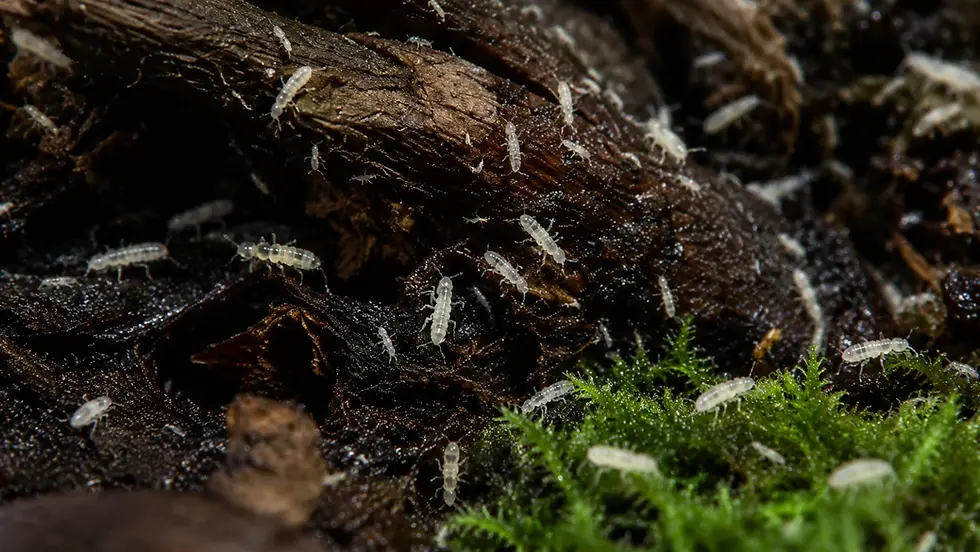
In a naturalistic setup, springtails eat mold and food remains and help keep things clean.
You will notice that we do not give an exact amount of water or food here. Every colony and every setup is different, so it works better to watch your ants and your nest: dry and clean is good, drops and fluff are a sign to change something.
Mold or Something Else?
Not everything white in a nest is mold. Eggs and larvae are white too, harvester ants pile up chewed seed husks, and leafcutter ants grow a fungus garden on purpose. Tiny white dots that move are more likely mites than mold. When in doubt, take a close-up photo and compare it over a few days. If your colony also stops eating, read why ants sometimes stop eating, and for more common pitfalls see our list of beginner ant keeping mistakes.
Read more: How to clean a 3D printed ant nest and Keeping a 3D printed nest moist.
Photo: Esthetic Ants


Comments