


Your First Weeks With an Ant Starter Set: Feeding, Watching and Patience
Your starter set is set up and the colony is in its new home. Now the fun part starts: watching. Here is what you can expect in the first weeks and how to look after your ants without doing too much. Still need to set it up? Follow How to Set Up Your Ant Starter Set first.
What you will see
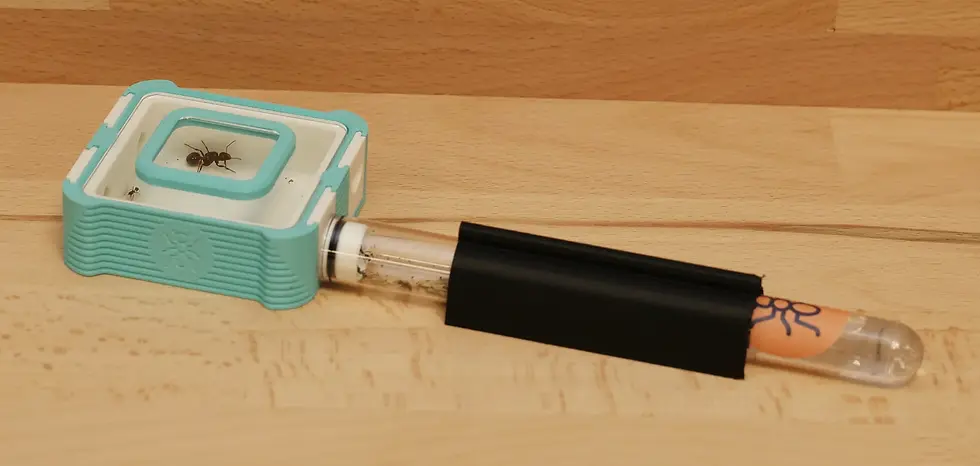
In the beginning the workers explore the outworld carefully, while the queen stays in the test tube with the brood. Some days you will see a lot of activity, other days hardly anything. That is completely normal. A young colony starts with only a few workers and grows at its own pace, depending on the species, the temperature and the colony itself.

How often to feed
Once or twice a week is plenty for a starter colony, and sometimes even less. Give a little at a time and adjust it to the size of your colony.
Lasius niger: a small drop of sugar water and now and then a small insect, such as a fruit fly or a piece of cricket. Cut bigger insects into small pieces and put them on a feeding dish. Read Honey, Sugar Water or Jelly? for the options.

Messor barbarus: a few seeds from the seed mix, plus a little protein now and then. Do not be surprised if the workers carry the seeds straight into the test tube: that is exactly what harvester ants do. Our post on seeds for harvester ants explains what works.

Remove leftovers before they mold, using the tweezers from the set. Old insect parts, empty seed husks and spilled sugar are the most common cause of mold in a small outworld.

Water and cleaning
Check the water reserve at the back of the test tube now and then. As long as there is water behind the cotton, your ants can drink. When it gets low, or the cotton turns dirty or moldy, it is time to think about a fresh test tube. Our test tube guide explains how to do that calmly.
Watching together

Ant keeping is a great thing to do with kids. Let them help with feeding under supervision, and keep a little diary of what you see: the first eggs, the first new workers, the day the ants carried off a seed. Take a peek at the brood every now and then, but put the dark cover back afterwards. More tips in An Ant Farm for Kids.
Winter and growth
In autumn many colonies slow down. Lasius niger needs a winter rest, and Messor barbarus also does well with a cooler, quieter period. Read Ant Hibernation to see how. When the test tube starts to feel crowded with workers and brood, your colony is ready for a bigger home. Signs Your Ant Colony Is Ready for a Bigger Nest helps you pick the right moment.
Photos: © Esthetic Ants, CC BY 4.0


Comments