


How to Make Your Own Ant Outworld (DIY Guide)
The outworld is where your ants find food, drop their waste and stretch their legs. It is also one of the easiest parts of a setup to build yourself. A plastic storage box, a glass jar or an old aquarium can all become a good outworld with a few simple changes. Here is what to look out for.
Choose the container
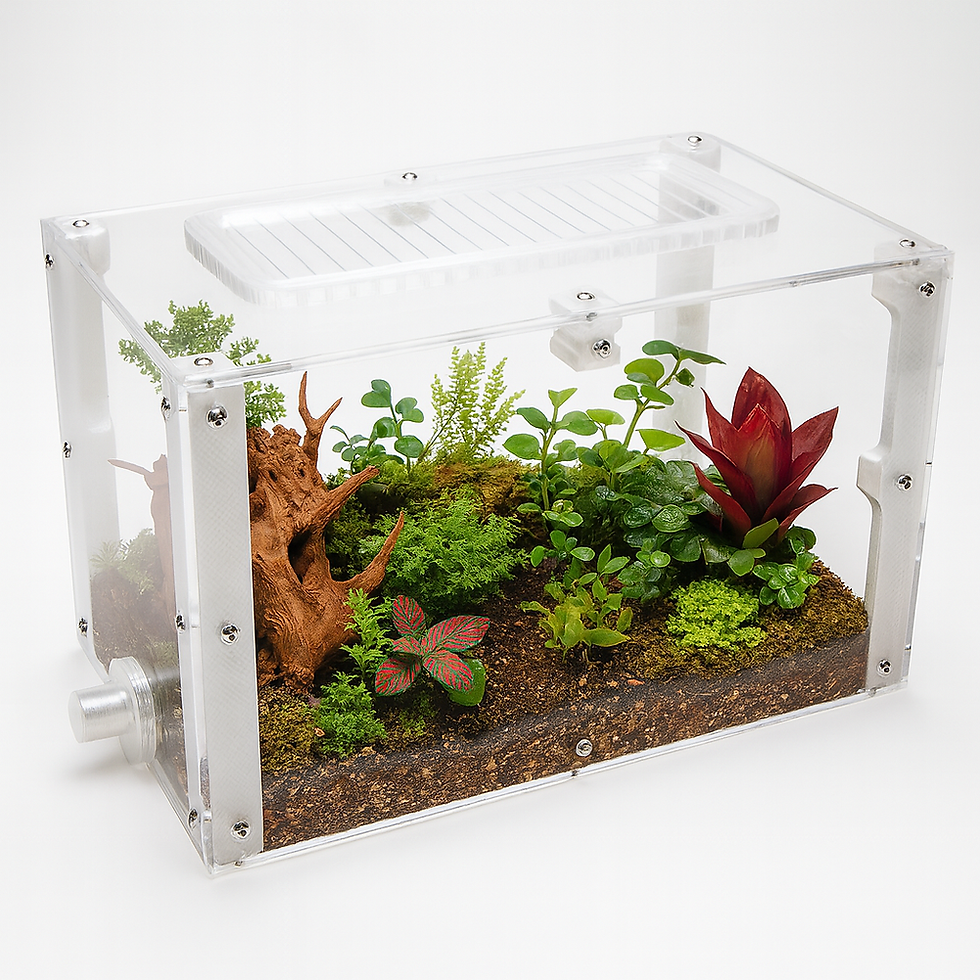
Any clean, transparent container will do, as long as it suits the size of your colony. Plastic storage boxes are cheap and easy to drill. Glass jars and small aquariums do not scratch and look great, but making holes in glass is a lot harder. Skip containers that held chemicals or strongly scented products. Match the size to the colony: in a huge box a tiny colony struggles to find its food, while a big colony in a small box gets crowded and dirty quickly. When in doubt, start smaller and connect a second outworld later.
Ventilation without escapes
Ants need fresh air, but they squeeze through any gap their head fits into. Make a few holes in the lid or the upper sides and cover them on the inside with fine stainless steel mesh, fixed with hot glue or aquarium silicone. Fabric or an old pair of tights works for a while, but strong ants can chew through it. Good airflow keeps the outworld from getting stuffy and helps prevent mould.
Connect the nest
To connect a nest with tubing, make a hole in the side that is slightly smaller than the tubing, so the tube pushes in tightly. In plastic you can use a step drill bit, or melt a clean hole with a heated metal tube (outside, and keep away from the fumes). Glass needs a diamond hole saw and water to keep it cool. A tight fit means you need no glue and leaves no gap for escapees.
Add an escape barrier
Even with a closed lid, a barrier along the inside of the top edge makes life much easier, because you can open the lid to feed without ants running out. Fluon is the most reliable option. Talcum powder mixed with alcohol is a cheap alternative that many keepers make themselves. Apply it in a band along the top few centimetres and keep it clean, because dust and dirt on the barrier give ants grip. You will find more tips in our guide on preventing escapes.
Substrate and decoration
A bare floor is easiest to keep clean, but most keepers like a more natural look. Sand, soil or a mix of both works for most species. Heat it in the oven or freeze it before use to kill mites and other hitchhikers. Rinse stones and twigs from outside and boil or bake them first. Leave an open spot where you put the food, so you can remove leftovers before they mould. Our guide on setting up an outworld has plenty more ideas for the inside.
Common mistakes
Air holes without mesh, or mesh with openings that are too large
Glue or silicone that has not fully cured before the ants move in
A barrier that is too narrow or has gone dusty
A container that is far too big for a young colony
Substrate that stays wet, which quickly leads to mould and mites
Rather buy one?
If you would rather skip the drilling, our Budget Outworld is an affordable ready-made option and the Mini Outworld V2 fits small colonies and test tube setups. Building the nest yourself too? Read our guides on making a Ytong ant nest and making a gypsum ant nest, or How to Keep Ants for Free for a complete budget setup.


Comments