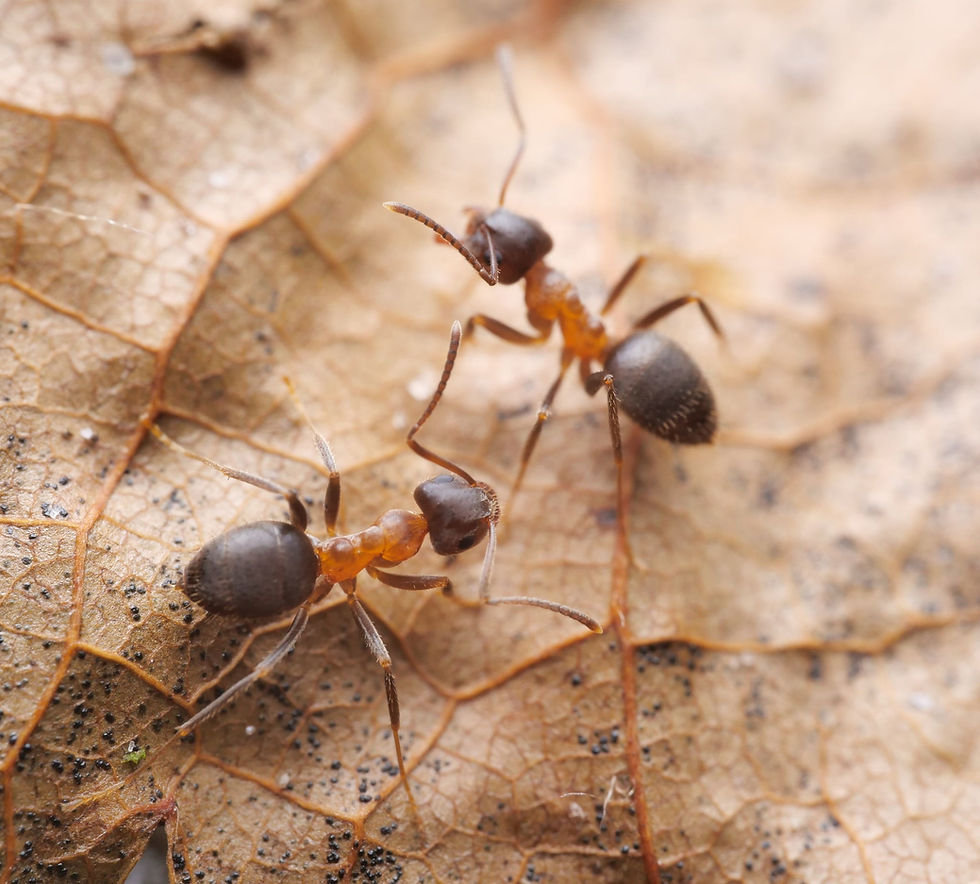
Maak kennis met Camponotus castaneus, beter bekend als de kastanje-timmermanmier of rode hazelnoot-timmermanmier. Deze soort staat bekend om zijn opvallende rood-oranje kleur en fascinerende nestelgewoonten. Deze mieren komen voornamelijk voor in de oostelijke regio's van de Verenigde Staten en staan bekend om hun verlegen aard en nachtelijke activiteiten. Of u nu een ervaren mierenhouder bent of een nieuwsgierige beginner, Camponotus castaneus biedt een unieke en lonende ervaring.
Camponotus castaneus
Camponotus castaneus typically nests in soil, under stones, or in rotten wood and fallen branches. These ants are often found in deciduous forests, where they construct their nests at the base of trees, such as Fagus grandifolia, in seepage areas. They prefer relatively warm and humid chambers and are most active during the night. These ants form moderately populous colonies, which can reach several hundred individuals, including a single queen, various worker sizes, and occasionally majors and super-majors.
When acquiring a Camponotus castaneus colony, it's important to provide an environment that mimics their natural habitat. They require a suitable nest setup that offers the right temperature, humidity, and space for their colony to thrive. Due to their timid nature and nocturnal habits, they may not be the best choice for beginners but can be a fascinating addition for more experienced ant keepers.
Food: Camponotus castaneus ants are not picky eaters. They enjoy sugars from fruits, honeydew, and sugar water, as well as proteins from insects such as fruit flies, mealworms, and small crickets. Ensure any wild-caught insects are sterilized by freezing or boiling to prevent introducing mites.
Humidity: These ants require moderate humidity levels. Maintain 50-70% humidity in the nest and 50-60% in the outworld. Hydrating the nest partially is usually sufficient.
Temperature: Camponotus castaneus thrives in temperatures of 24-28°C in the nest and 20-28°C in the outworld. Heating one side of the nest can provide a comfortable gradient for the ants.
Hibernation: This species undergoes diapause, a hibernation-like state, from November to March. They enter diapause early, with activity ceasing during the first cool days of fall. During diapause, maintain a temperature between 12-15°C.
Sting/Bite: Camponotus castaneus ants do not sting, and while they can bite, it is not particularly painful. Handling should be done with care, especially to avoid stressing the queen during the founding stage.
Nesting and Housing: Camponotus castaneus can adapt to various nest types, including soil nests, under stones, and rarely in rotten wood. For captivity, they can be housed in a variety of setups, such as farms, basins, or plaster nests. Ensure the formicarium has a size suitable for their colony, and use substrates like sand-loam and forest floor to mimic their natural environment. Decorations such as branches, leaf litter, and stones can help create a more natural habitat.
Development and Life Cycle: Camponotus castaneus follows a typical ant development cycle with four stages: egg, larva, pupa, and adult. The entire process takes about 35-60 days, depending on environmental factors like temperature, food availability, and humidity.
Nuptial Flights and Colony Founding: Nuptial flights for Camponotus castaneus occur in June and July, with some extending into August. During these flights, queens mate with multiple males, then shed their wings and seek a suitable location to start a new colony. Founding queens are claustral and do not require feeding during this stage, but they are highly susceptible to stress.
Lifespan and Colony Size: Camponotus castaneus colonies can reach several hundred individuals. The queen can live for over a decade, while workers can live multiple years. The colony grows slowly in the first year but becomes more populous over time.
Identification: Camponotus castaneus is easily identified by its orangish-red coloration, smooth thorax and abdomen, and single node separating them. Workers range from 7-10 mm, majors 10-14 mm, and queens 18-20 mm. They lack stingers and have a distinctive square-ish head, with darker heads in older workers.