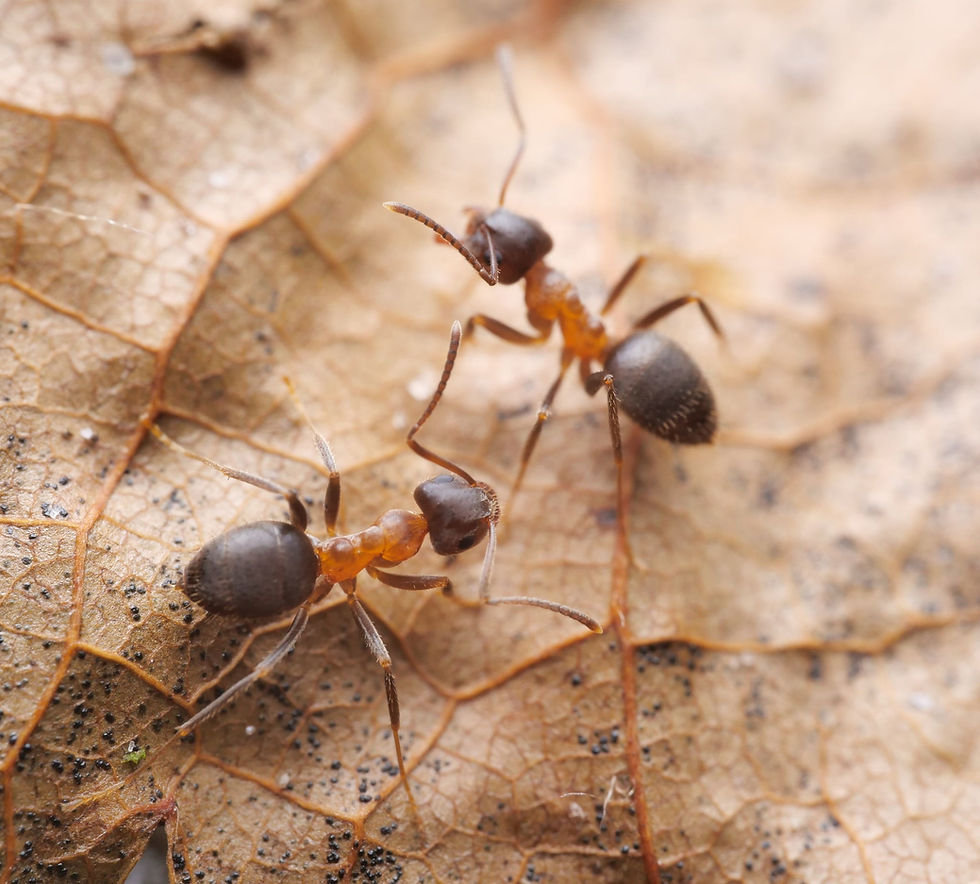
Queen will come in a test tube filled with soil and springtails.
Hypoponera punctatissima
Hypoponera punctatissima nests in all kinds of A widespread ponerine tramp-species, this small ant can be found nesting in settings that vary from litter, soil, and rotten wood in forests to disturbed sites such as gardens and fields.
Although not much information is known about this species here are a few interesting facts about them. It is polygynous and polydomous. Two types of queen are present, winged and apterous. Males are also dimorphic, they may be large, apterous and dark brown, or small, apterous and yellow. Their reproductive system is very interesting.
Colonies are found by a single or several allate Queens which spread, mated from their home nest. When colony grows a bit, ergatoid (wingless) queens and males are born. Males fight between them for mating with the new ergatoid Queens (which take the reproductive role of the colony) and new winged queens (future dispersal Queens).
There are two type of males. Major males, Big headed and aggressive which fight each other and minor males, which mimicry with the worker scent for sneaky mating while majors fight. Their main food consists of springtales.
General
Caring for Hypoponera punctatissima is not for your average beginner. The queen is very small and workers are even smaller. They also require a very specific type of setup and care.Food
You can feed Hypoponera punctatissima springtails and sugar water. Larger insects they won't take because of their size.Humidity
Hypoponera punctatissima needs a damp nest. If you hydrate the nest regularly (once or twice a week) you should have no problem in keeping the humidity right for these ants. Always make sure the ants have an external watersource in the test tube when in a nest.Temperature
The right temperature is not yet really researched for this species. They like it a little warmer then the outside temperature so we recommend you don't keep them very warm.Hibernation
Hypoponera punctatissima does go into diapause during the winter months.Sting/bite
These ants do sting and can cause severe allergic reactions. It is recommend to wear gloves when handeling these ants.Because there isn't much known about this species we recommend a small natural setup for these ants.