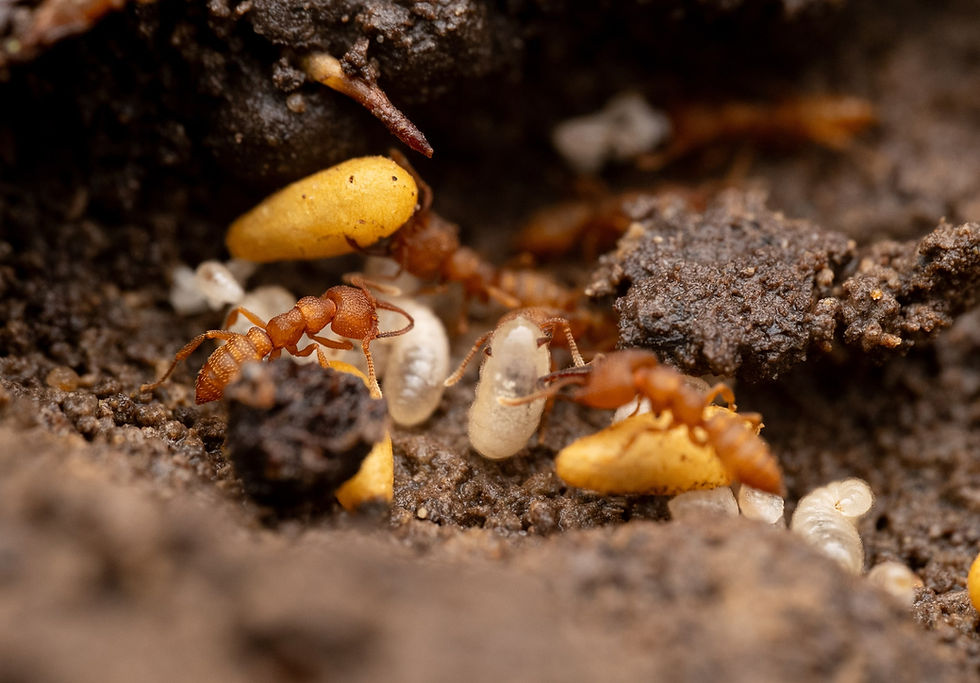
Welcome to the fascinating world of Polyrhachis dives, also known as the lesser weaver ants, renowned for their unique nesting habits and social structure. Originating from South Asia, these ants exhibit remarkable behaviors, including the construction of intricate air-borne nests using silk produced by their larvae. With their distinctive characteristics and captivating behaviors, Polyrhachis dives colonies offer an intriguing experience for ant enthusiasts.

Pictures: @photography_by_gus
Polyrhachis dives
Polyrhachis dives inhabits open woodlands and swampy coastal plains of South Asia, where it constructs its characteristic carton nests on lower branches of grasses, trees, and shrubs. Utilizing larval silk, the ants join foliage and twigs to form their nests, showcasing their remarkable weaving abilities. With polygynous behavior, colonies often harbor approximately 50 queens, facilitating the formation of super colonies and the construction of massive nests.
Queen are around 10-15 mm and workers are a little bit smaller ranging from 5-9 mm. The species has one cast and does not produce majors or soldiers. The queens found semi-claustral meaning they need to be fed during founding and hunt for their food.
Colonies don't get very large despite their polygynous behaviour. Most captive colonies can range from 2000-3000 workers.
They are often called lesser weaver ants because real weaver ants weave leaves. Polyrhachis dives weaves everything together to make a nest.
Source: AntWiki
When acquiring a Polyrhachis dives colony, it's essential to consider their unique nesting requirements. As they require specialized setups due to their air-borne nesting habits, thorough research is necessary to ensure proper care and colony development. While Polyrhachis dives colonies can thrive under suitable conditions, their specific needs may pose challenges for novice ant keepers.
Caring for Polyrhachis dives colonies involves meeting their distinct requirements:
-
Food: Provide a varied diet consisting of sugars from fruit, sugar water, or ant jellies, supplemented with protein sources such as fruit flies, mealworms, and crickets. Ensure any wild-caught insects are sterilized to prevent introducing mites to the colony.
-
Humidity: Maintain a fairly high humidity level, offering partial nest hydration to create an optimal environment for colony development. Regular monitoring and adjustments are crucial to support colony health and well-being.
-
Temperature: Maintain a temperature of around 25 degrees Celsius, providing a heated nest area to establish a suitable gradient for the ants. Optimal temperature conditions contribute to colony activity and growth.
-
Hibernation: Polyrhachis dives colonies do not hibernate, remaining active throughout the year. Consistent care and attention are necessary to support their continuous development and well-being.
-
Sting/Bite: While Polyrhachis dives ants do not sting or bite, their unique nesting habits and specialized requirements necessitate careful handling and consideration. Protective measures may be necessary to ensure safe interaction with the colony.
Polyrhachis dives requires specialized nest setups tailored to their air-borne nesting habits. While standard ant nests may not be suitable, natural nest setups provide an ideal environment for colony development. Conduct thorough research to identify suitable housing options and provide optimal conditions for your Polyrhachis dives colony's growth and prosperity.
Embark on an enthralling journey into the captivating world of Polyrhachis dives and experience the wonders of these lesser weaver ants. With dedication and careful attention to their unique needs, you'll witness the remarkable behaviors and colony dynamics of these fascinating ants.
-